AIMO
A modular DIY kit to bring any toy to life.
AI Product Designer / Creative Technologist / Interaction Designer
10+ years of interaction design,
from China to Spain,
from corporate to startup,
across hardware, software,
space, and brand —
all asking the same question:
how do people connect
with the objects around them?
Now at Elisava, asking it through AI.
A modular DIY kit to bring any toy to life.
AI emotional support for breakups
Wearable sports interaction
China's first tattoo art ecosystem
Tea experience & service design
Embodied computing & experiment
A modular DIY kit to bring any toy to life.
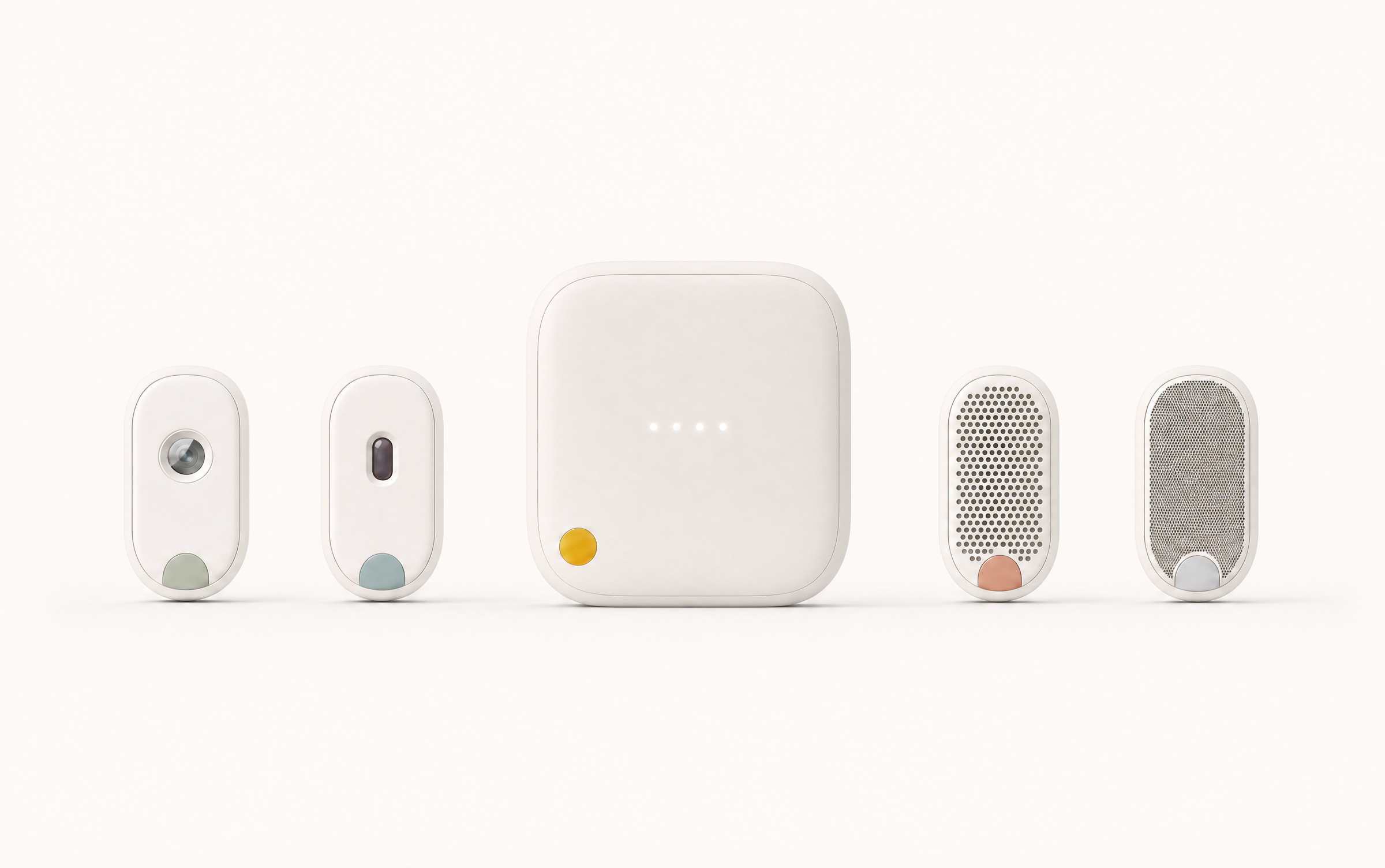
A kit that lets you bring any toy to life — no code, just you.
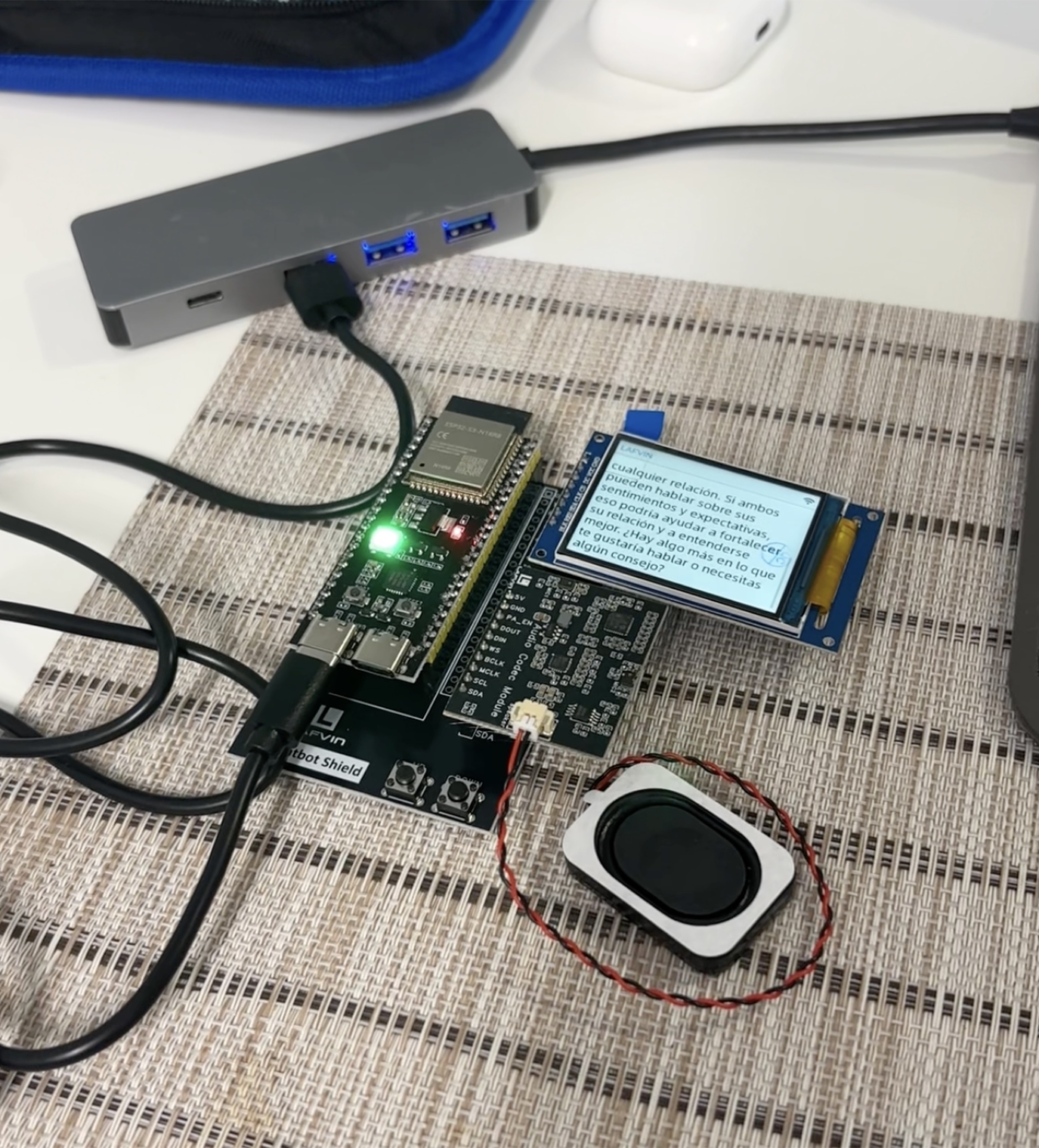
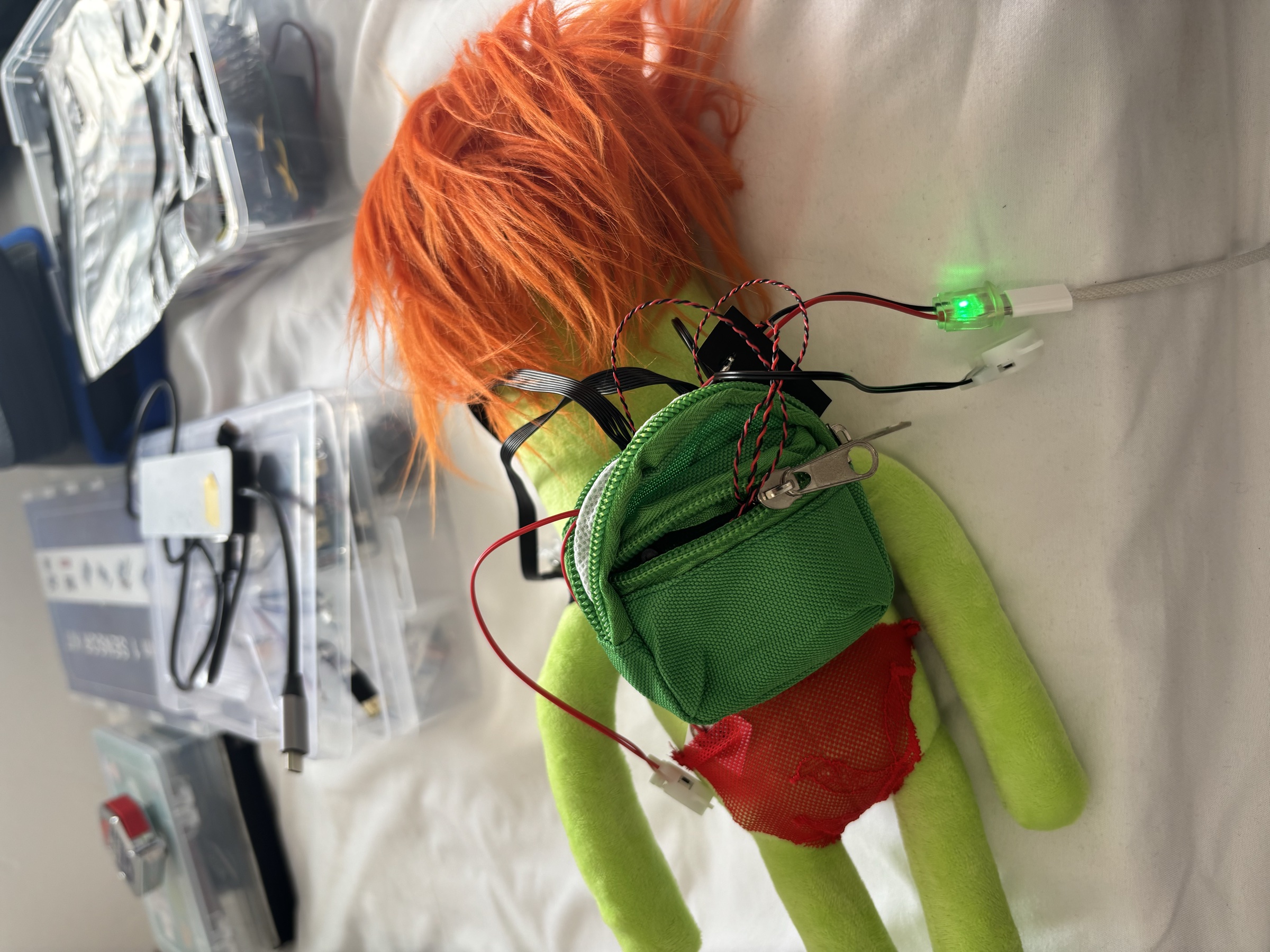
AIMO is a modular DIY kit for bringing any toy to life. Designed at Elisava Barcelona, it explores a new model of AI companionship — built on creation, not consumption. You assemble the hardware, write the personality, choose the sensors. The result is a companion shaped by your hands, defined by your words, and grows to know you over time. The project proposes three original concepts: prompt-as-model, emotional ownership through assembly, and a safety architecture designed around children's dignity and parental trust.
A modular companion built to be taken apart and grown over time, following a path of hear → feel → act. It starts as a small core that listens, and gradually gains touch, light sensing, and movement — slowly evolving into a being that can engage with the world around it.
The companion app lets anyone — with no coding required — shape their AI's personality, voice, and memories. I call this idea prompt-as-model: every line you write becomes part of its genes, and it keeps growing as you continue to raise it.
Reflection AIMO pushed me into territory I hadn't touched in 10 years of design — the ethics of emotional attachment to something that isn't alive. I approached it from the system level: what should an AI companion be allowed to do, and what should it never do? For children's mode, I defined a sandwich safety structure — human values at the top layer, AI behavioral constraints in the middle, parental co-authorship at the base. Not a feature. An answer to the question: when children interact with AI, how do we better take responsibility for what happens next?
Onboarding is creating experience
Prompt-as-model
Parent as co-creator, not supervisor.
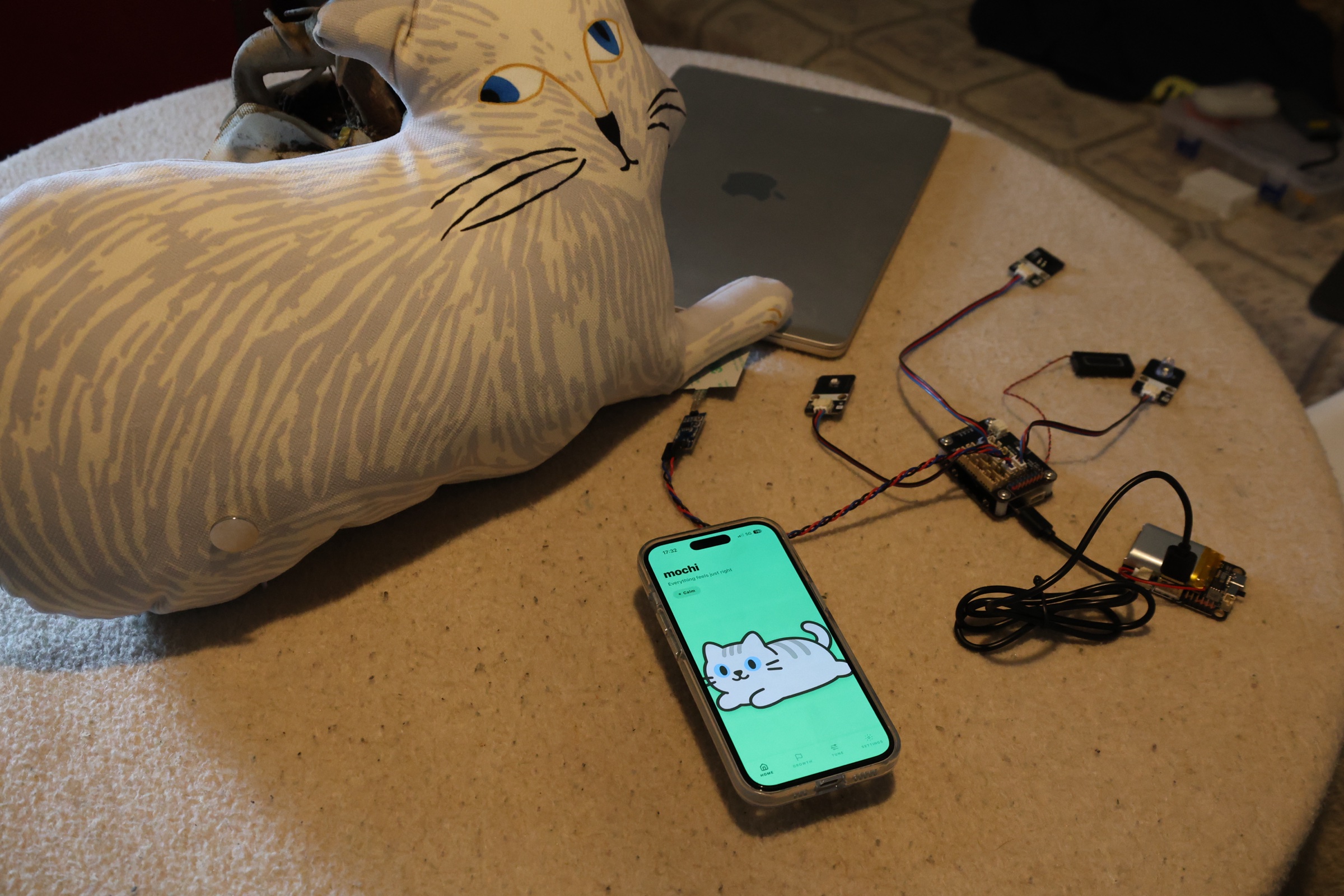
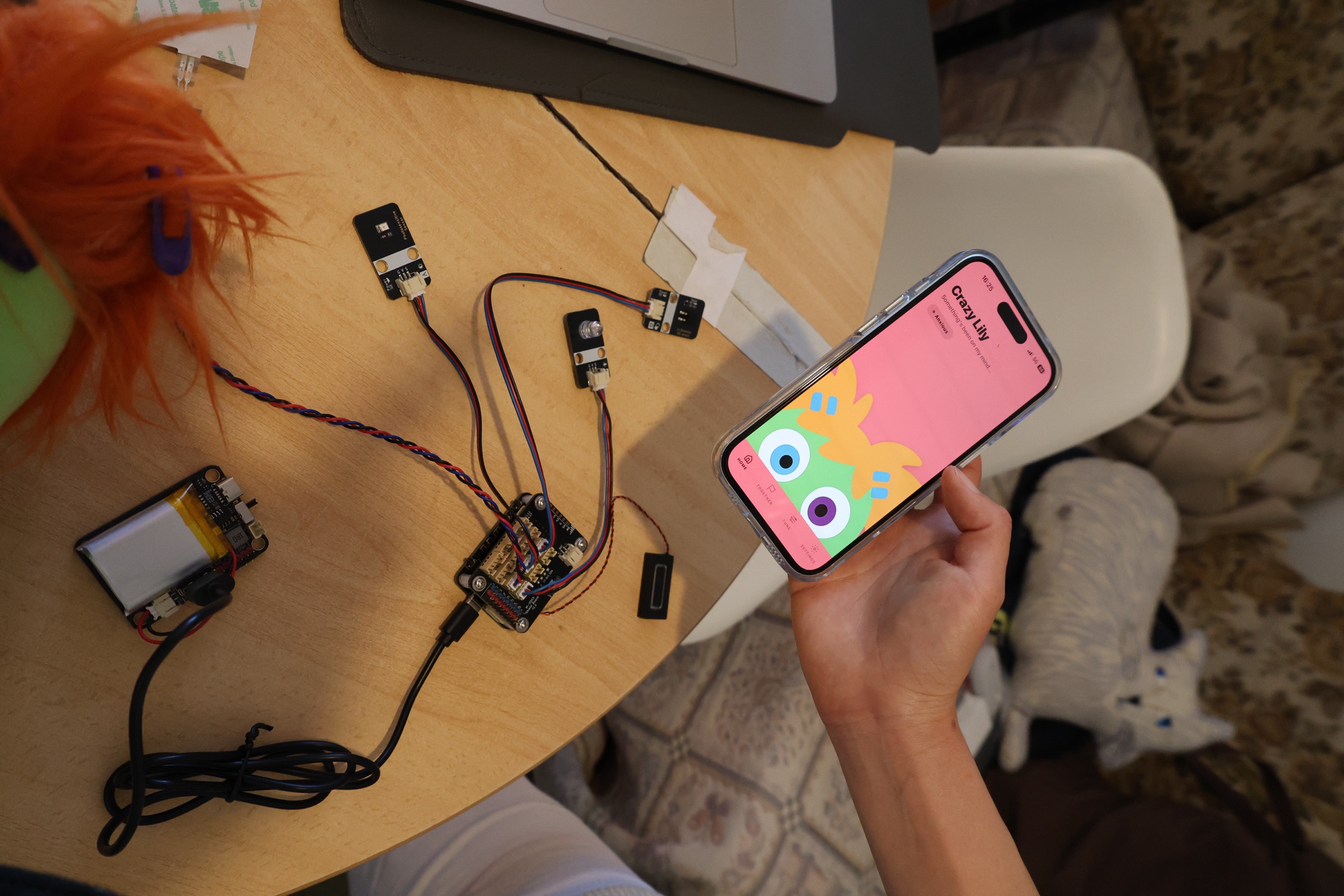
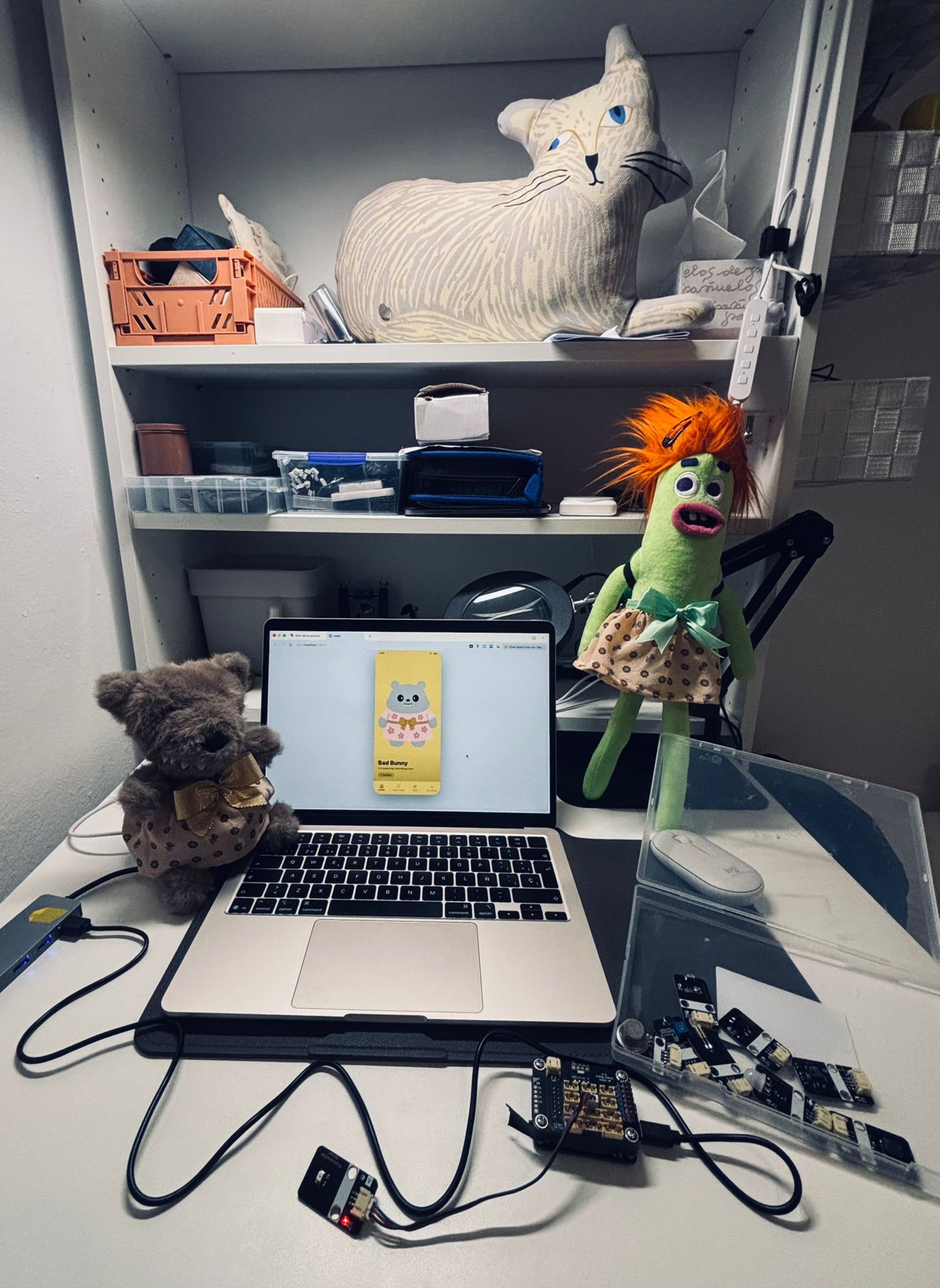
Experience the full project →
Visit AIMO Read the thesis (PDF) ↗AI emotional support for breakups
A space to fall apart — and find your way back.
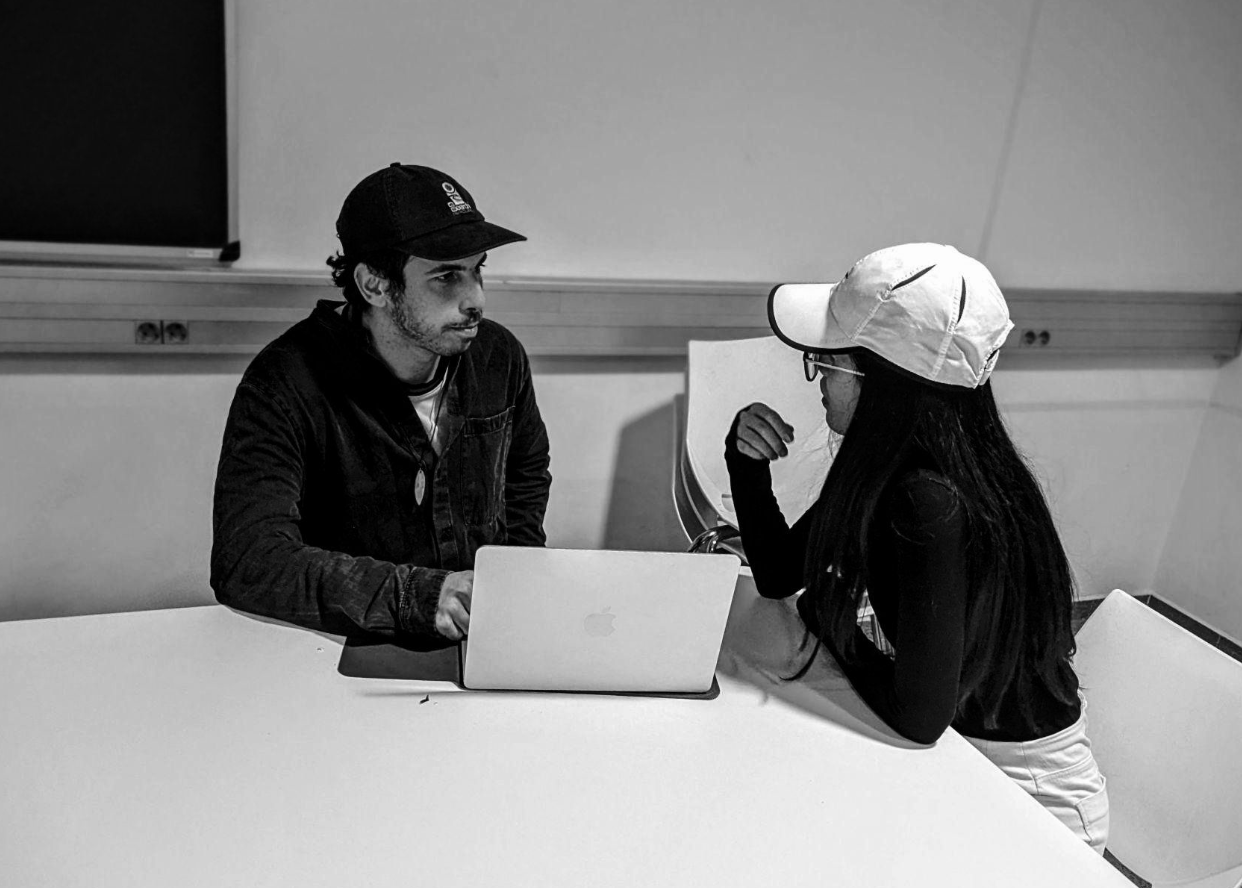
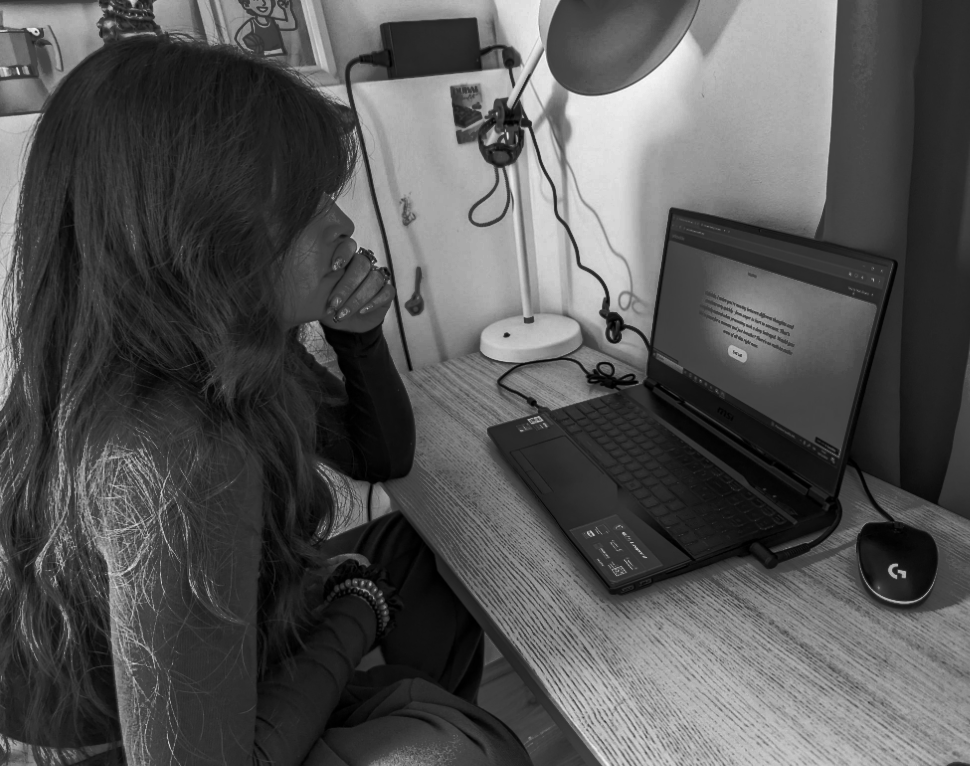
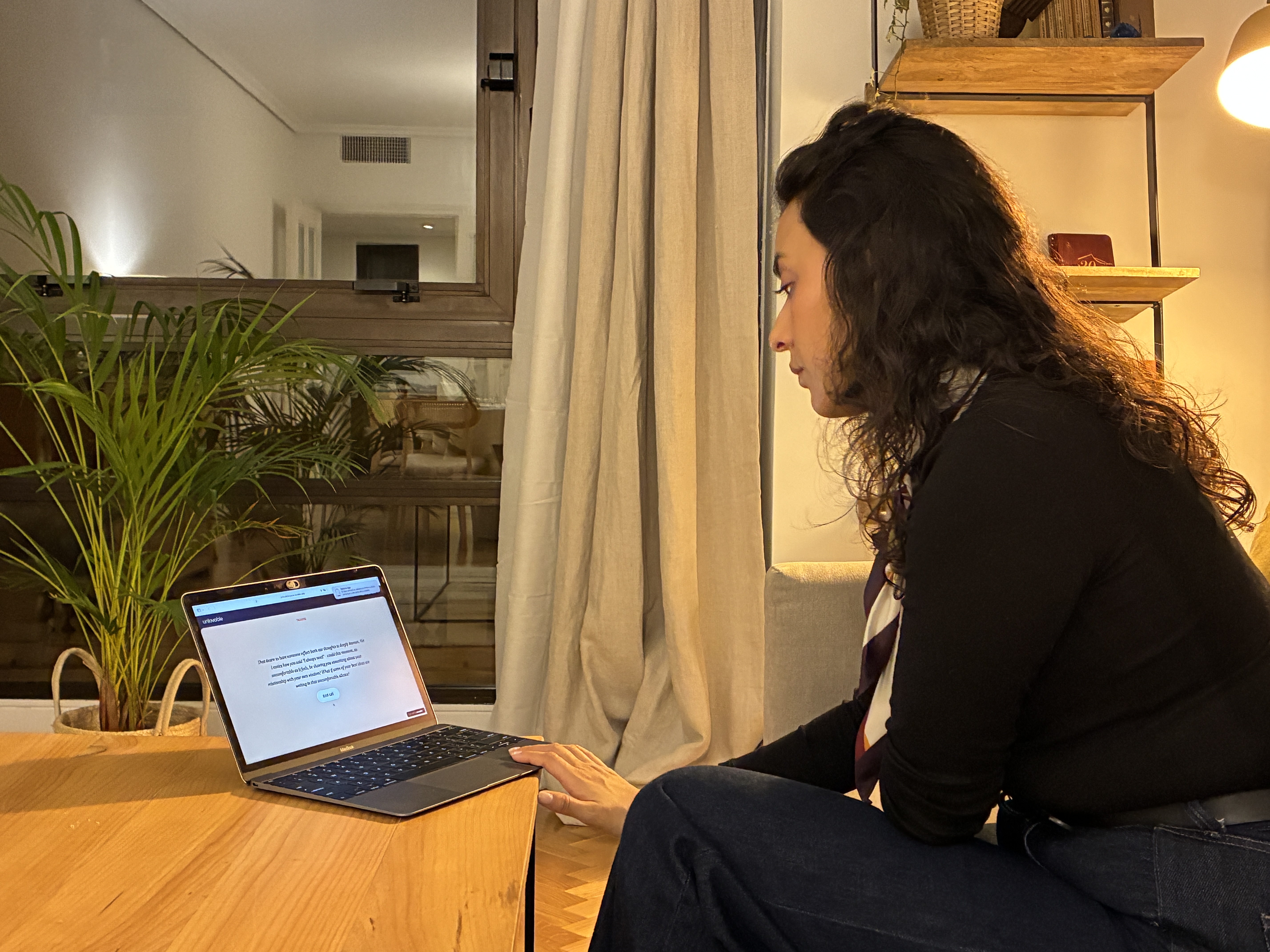
Unlovable began with a simple observation: most breakup advice tells you to move on, but nobody helps you sit with the grief first. It is an AI companion designed for the raw, disorienting weeks after a relationship ends — one that listens without fixing, reflects without judging, and stays present through the ugly parts.
The interface adapts to where you are emotionally. On hard days it offers presence and gentle prompts. On better days it helps you make sense of what happened. It never rushes you toward healing.
Every interaction detail — tone, pacing, visual language — was shaped around the specific emotional state of someone mid-heartbreak. Calm, low-contrast, unhurried.
Key decision One of the most important design decisions was ethical. We collaborated with a psychologist to define what this AI is allowed to do and, more critically, what it must never do: no diagnosis, no mimicking therapy, no empty promises. Every language rule and every escalation path — the moment the AI steps back and says 'you need a human' — was a deliberate design choice, not a limitation.
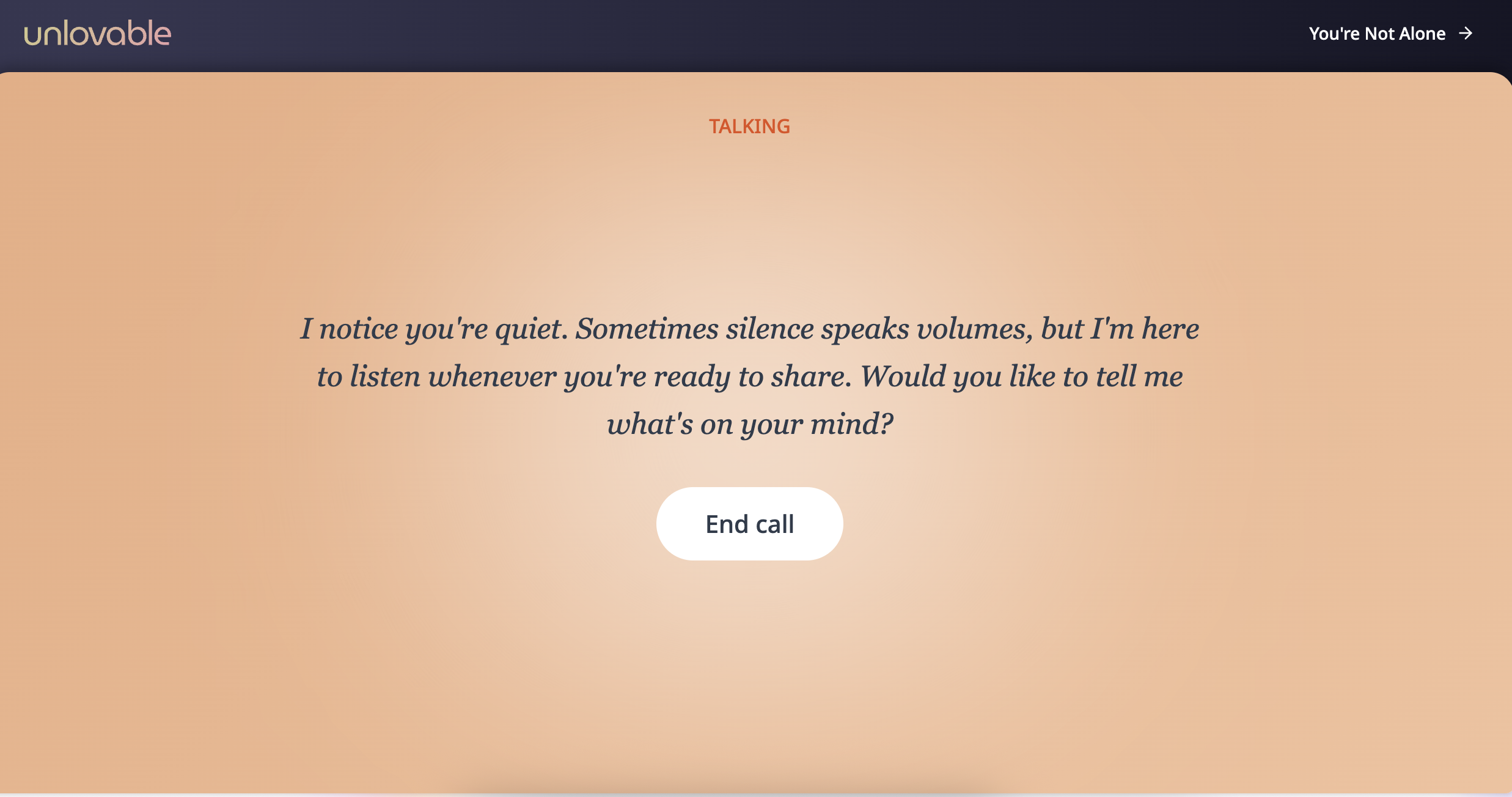
A soft, conversational entry point that meets you where you are each day.
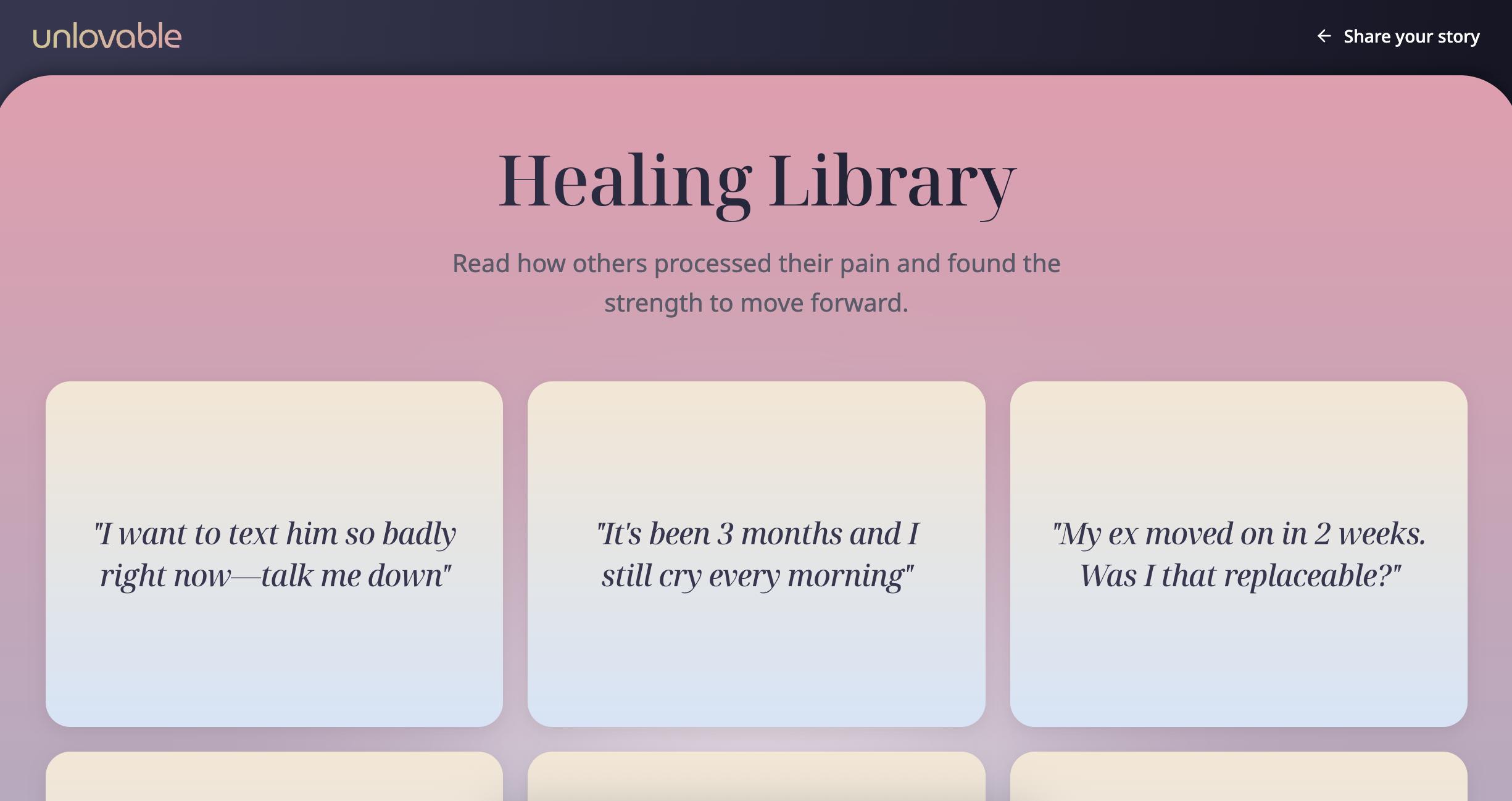
Stories shared by people who have been through it. Not advice — just proof that others felt exactly this, and found their way through.
• Users want a trusted, non-biased advisor — empathetic but honest. • Validation and release first, solutions later — especially in the first month. • AI feels safer for shame-heavy topics. Things you can't say out loud. • Conflicting advice from friends drives users toward AI as a cleaner signal. • Users want grounding in facts, not opinions. • Needs shift: presence first, then tools for moving forward. • Breakup decisions stay personal. AI supports, never decides.
Wearable sports interaction
Making the body's data feel human — not numerical.
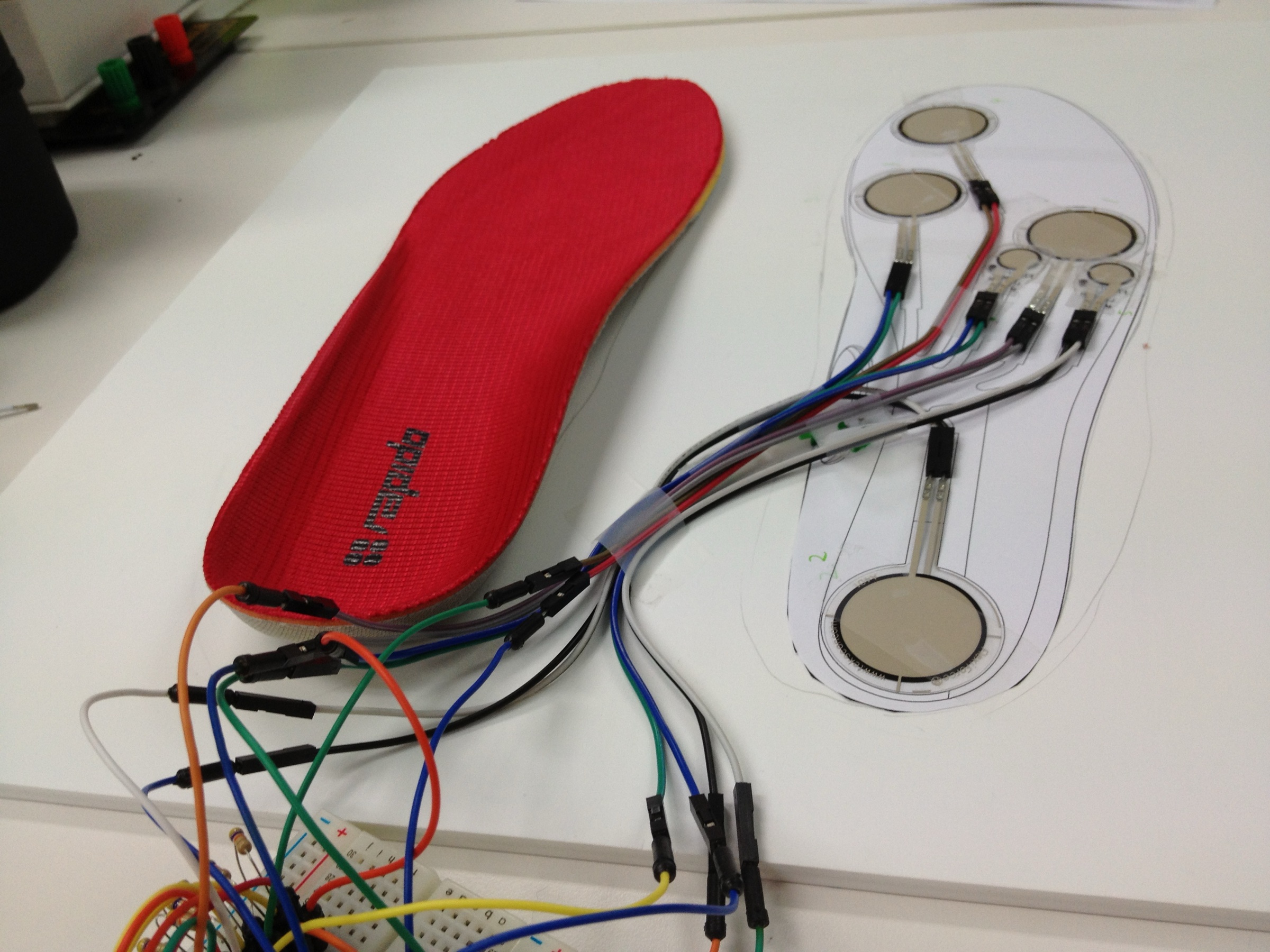
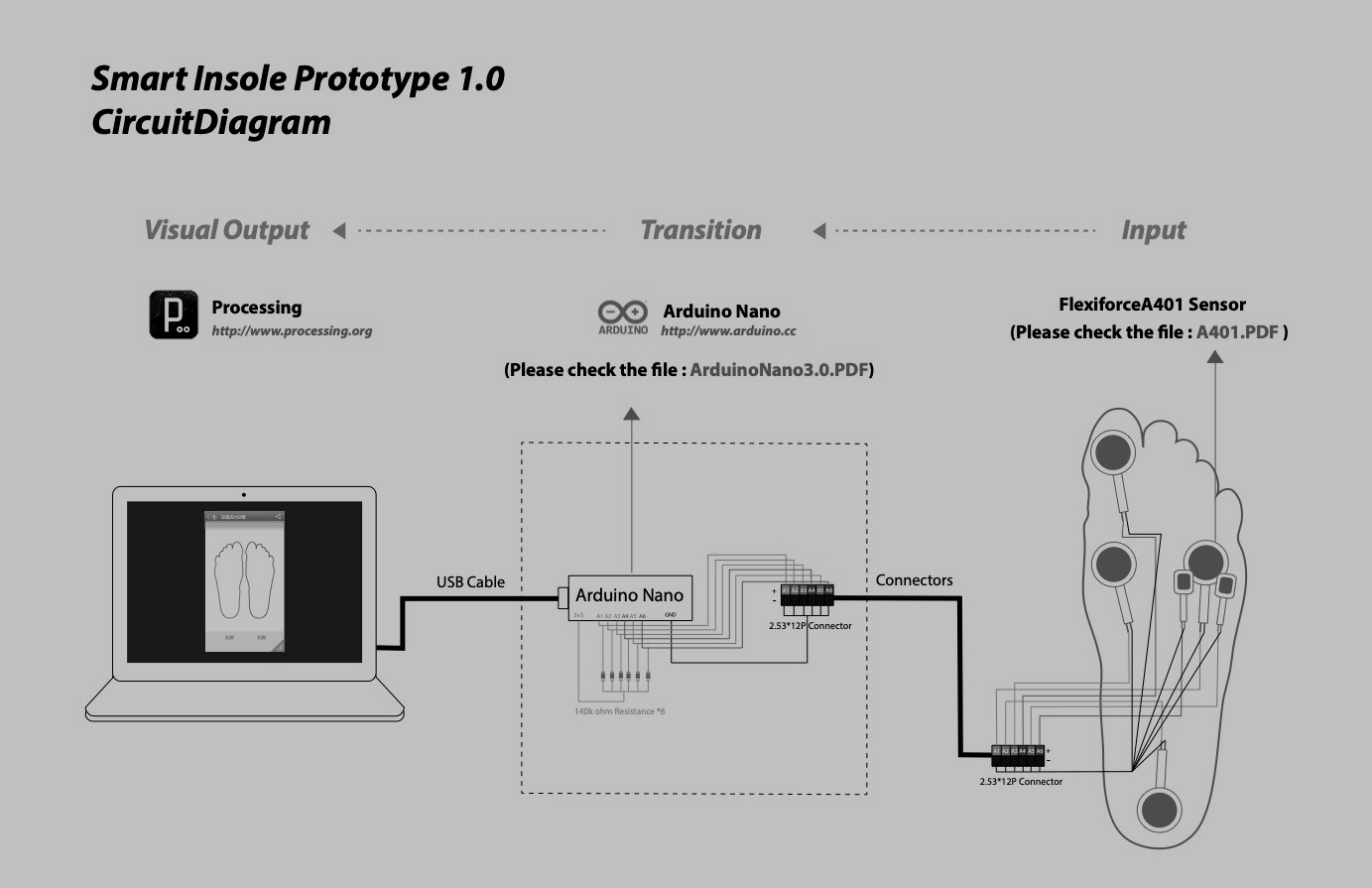
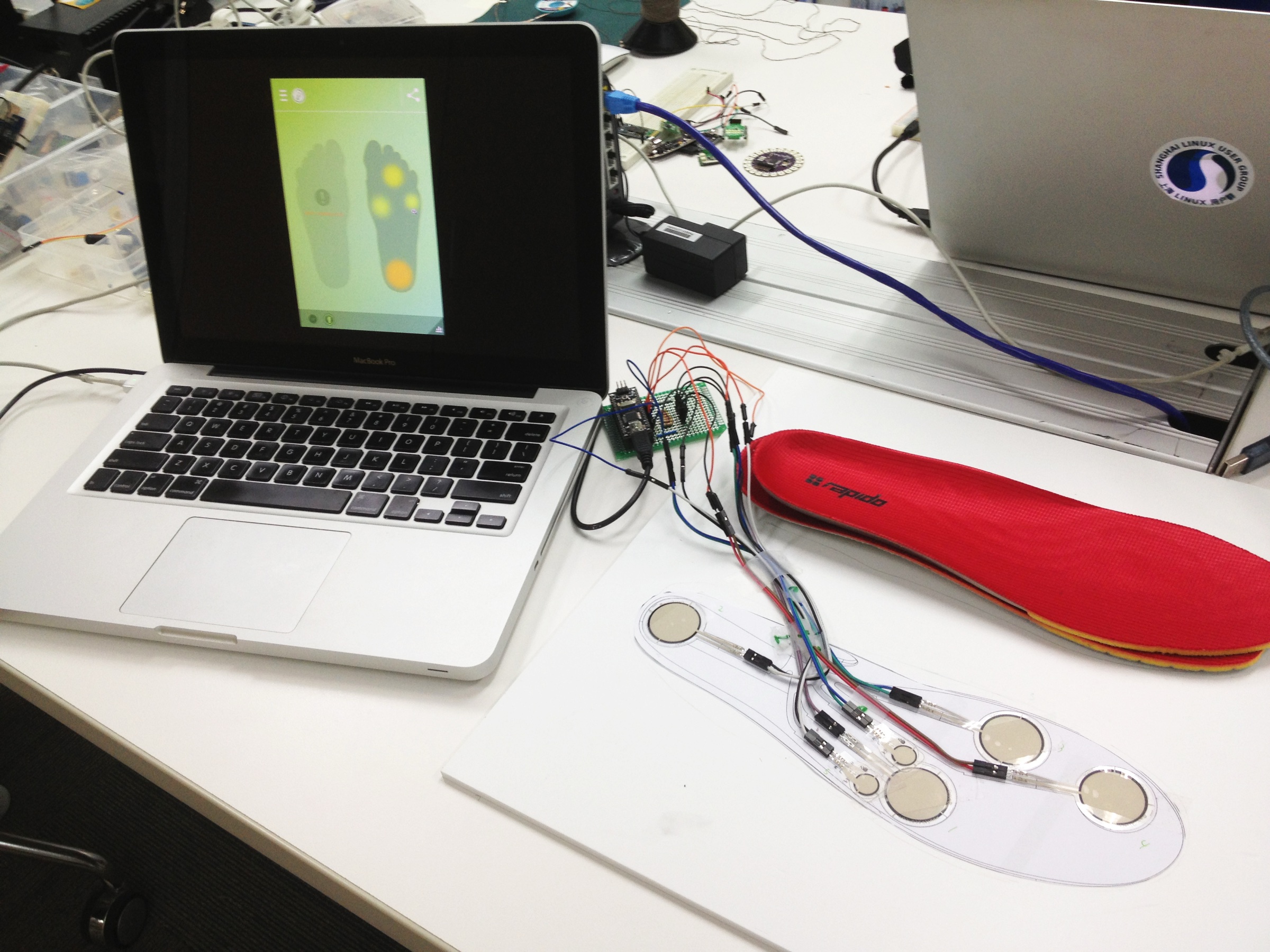
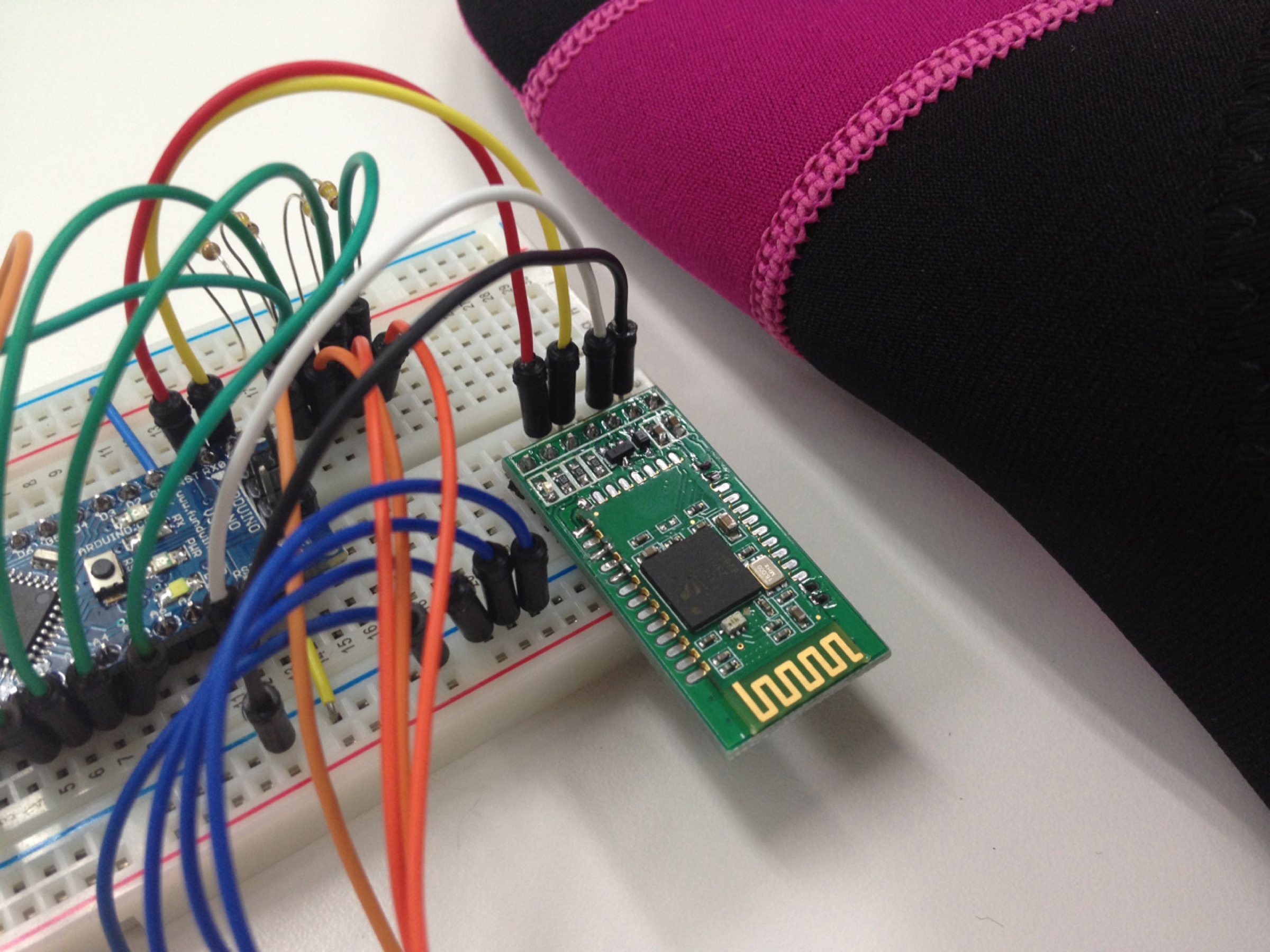
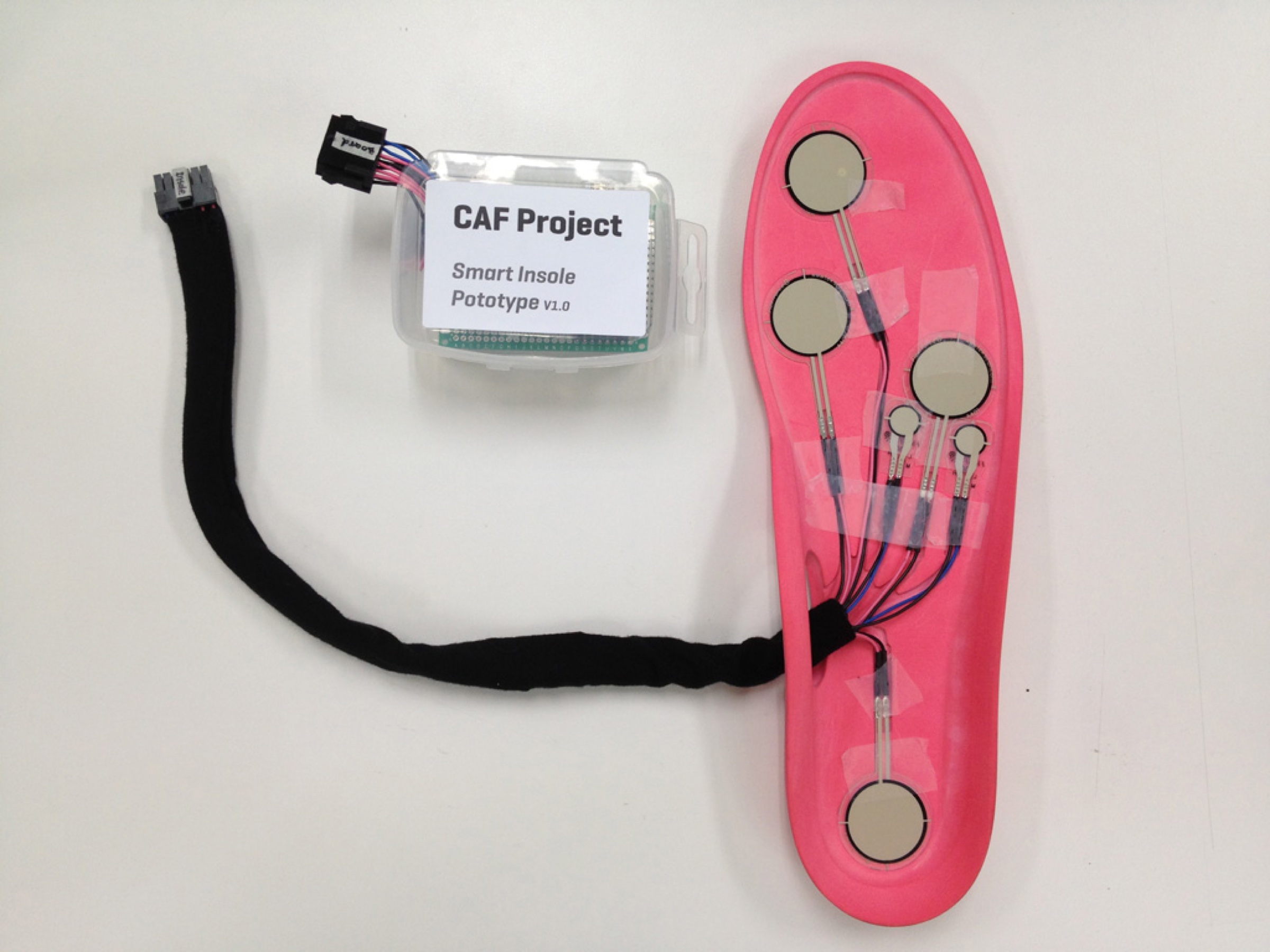
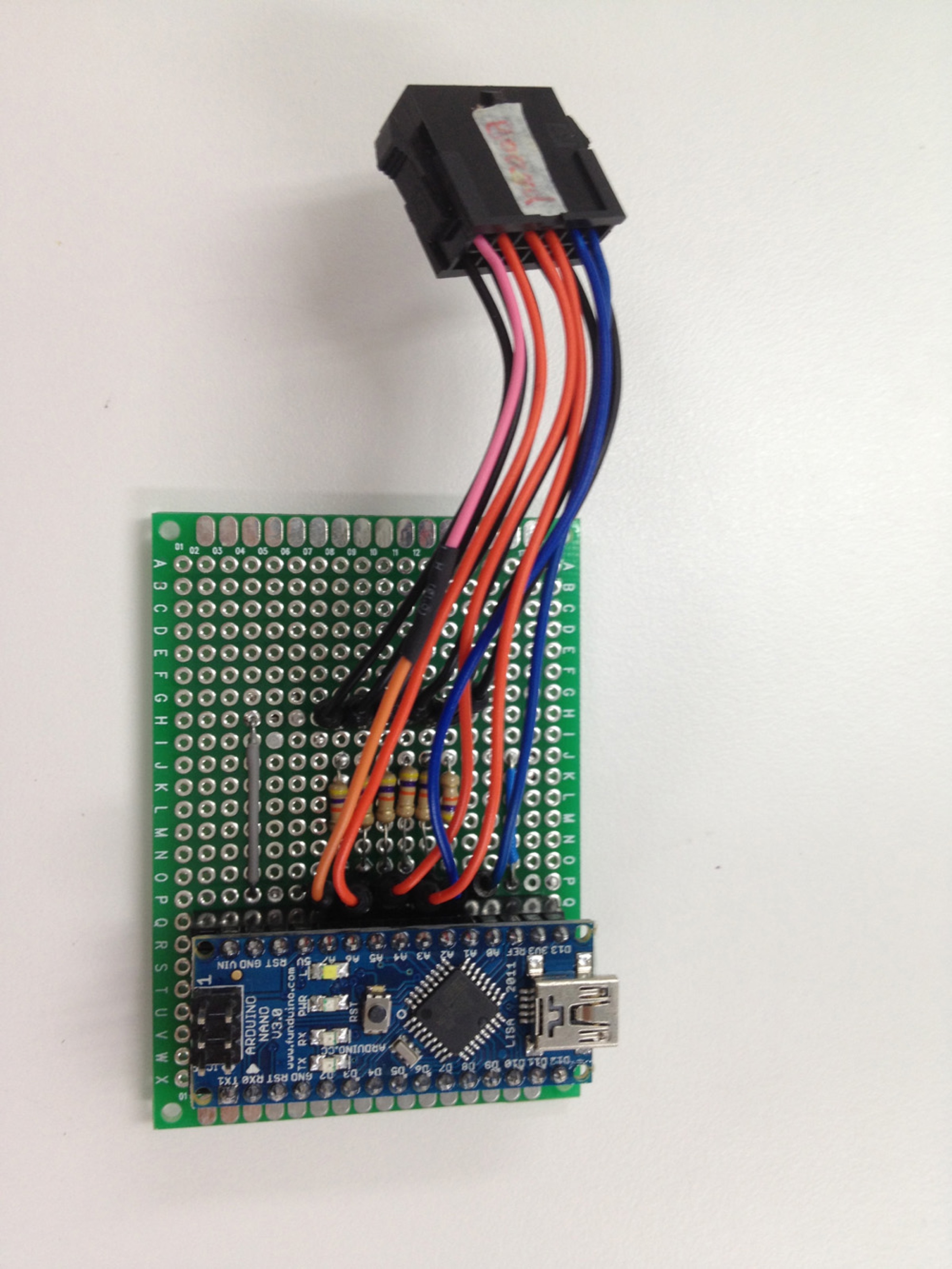
Samsung CAF is a smart badminton shoe designed for Chinese players — a sport that millions play casually but few have purpose-built gear for. My role was to translate foot-level sensor data — step frequency, footwork patterns, jump and landing impact — into feedback that an athlete could feel mid-rally, not read after the game. The challenge: the wearer never looks at the shoe. Every signal had to reach them through rhythm, vibration, and the companion app on their wrist or phone.
I designed the interaction model around a single constraint: the shoe has no screen, and the player has no attention to spare. Critical feedback — fatigue thresholds, footwork irregularities — surfaced through subtle haptic patterns at the sole; deeper analysis lived in the companion app for post-game review. The result was a two-layer system: ambient awareness during play, considered reflection after.
Looking back Samsung was my first experience working inside a large multinational — collaborating across research, industrial design, structural engineering, and development all at once. The biggest growth wasn't in the design itself, but in learning how to move between disciplines: understanding enough of each world to communicate clearly, and trusting others to do what they do best. That's what made the work feel like a team effort.
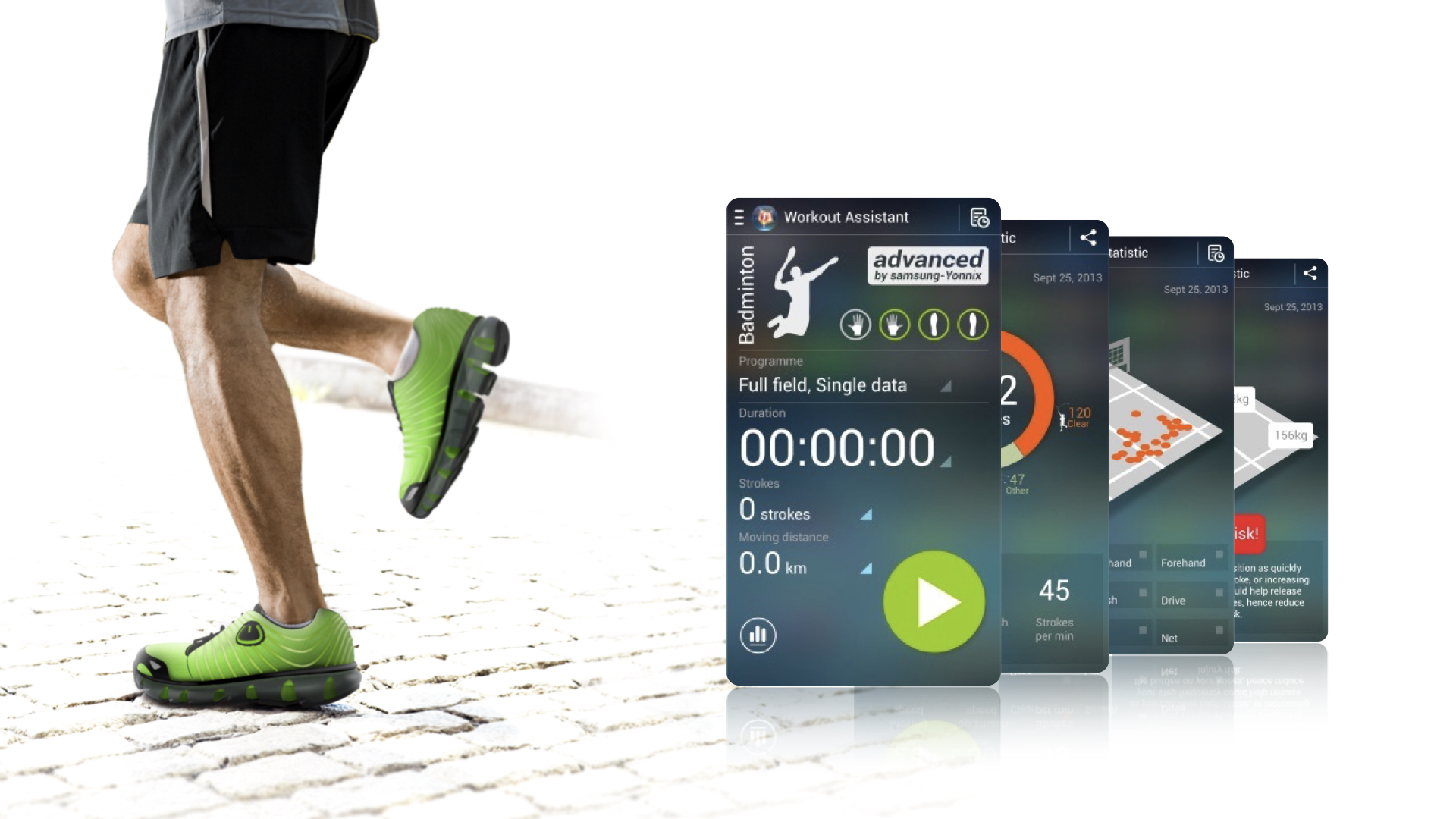
Alongside the shoe, I designed the companion app interface that pairs the two halves of the system. Real-time haptics live in the sole; structured insight lives on the screen. The pairing flow, training session UI, and post-game analytics were designed as one continuous experience — so the moment a player ties their shoes, the software is already listening.
China's first tattoo art ecosystem
Ink culture, built from the ground up.
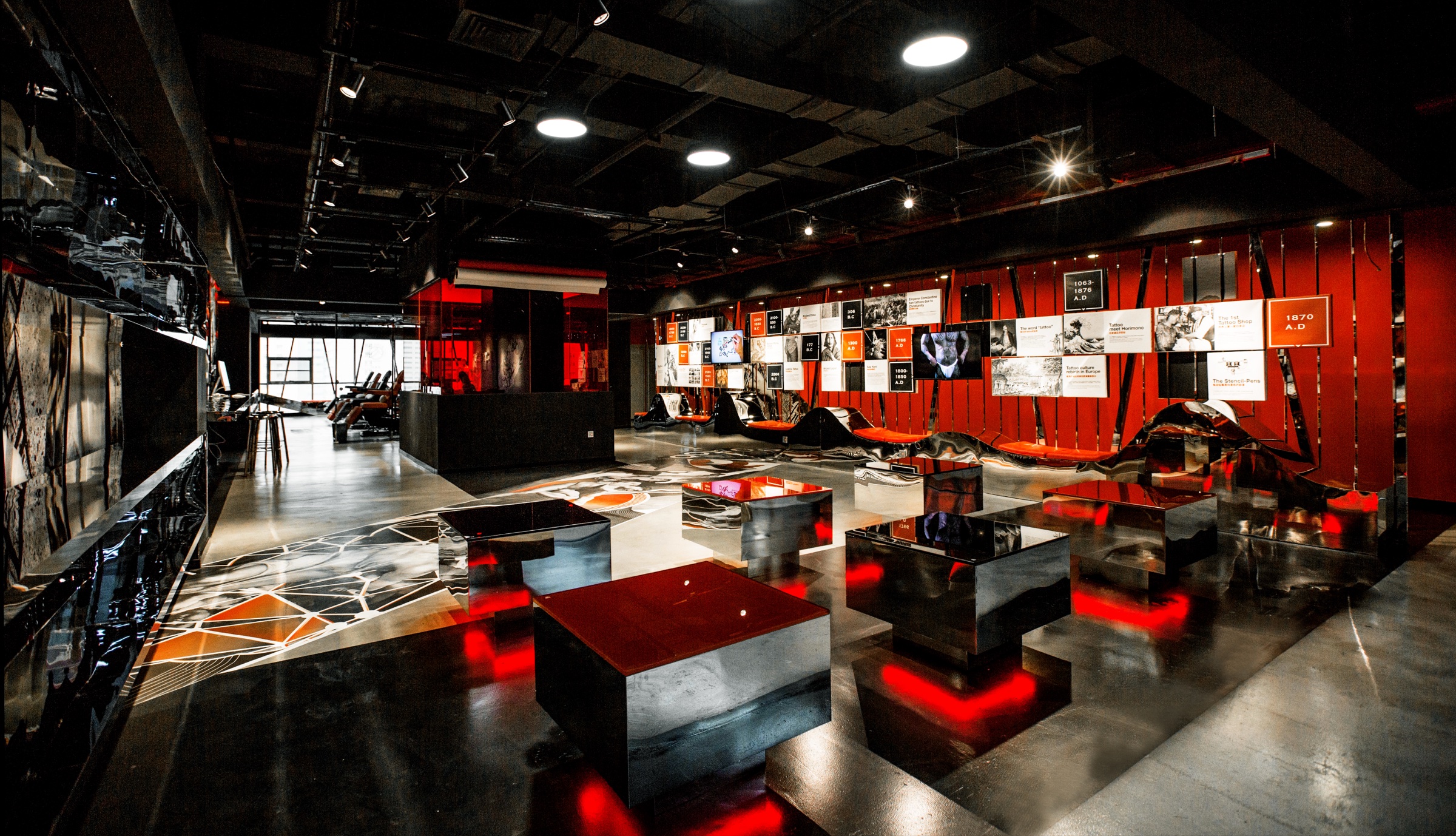
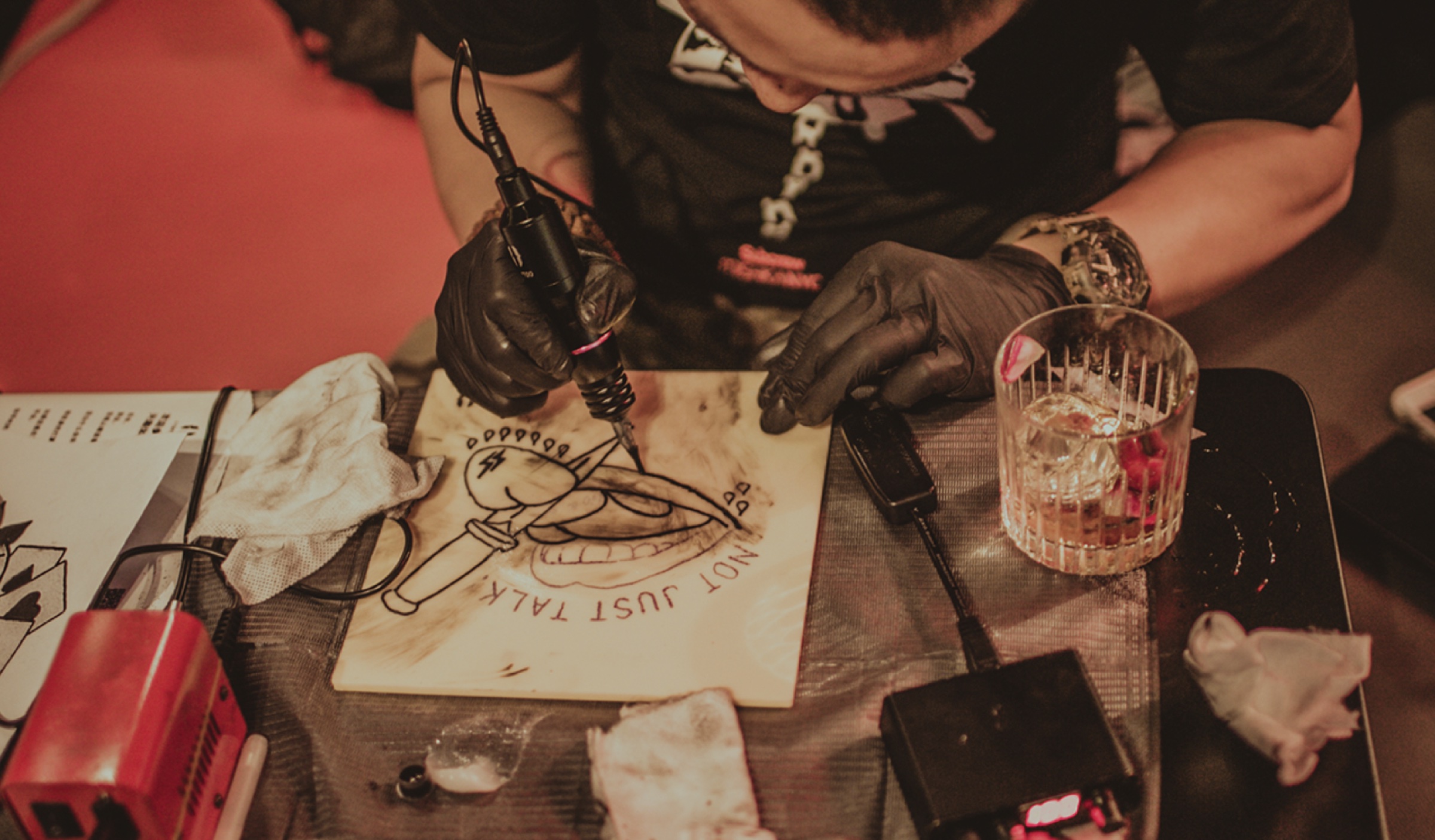
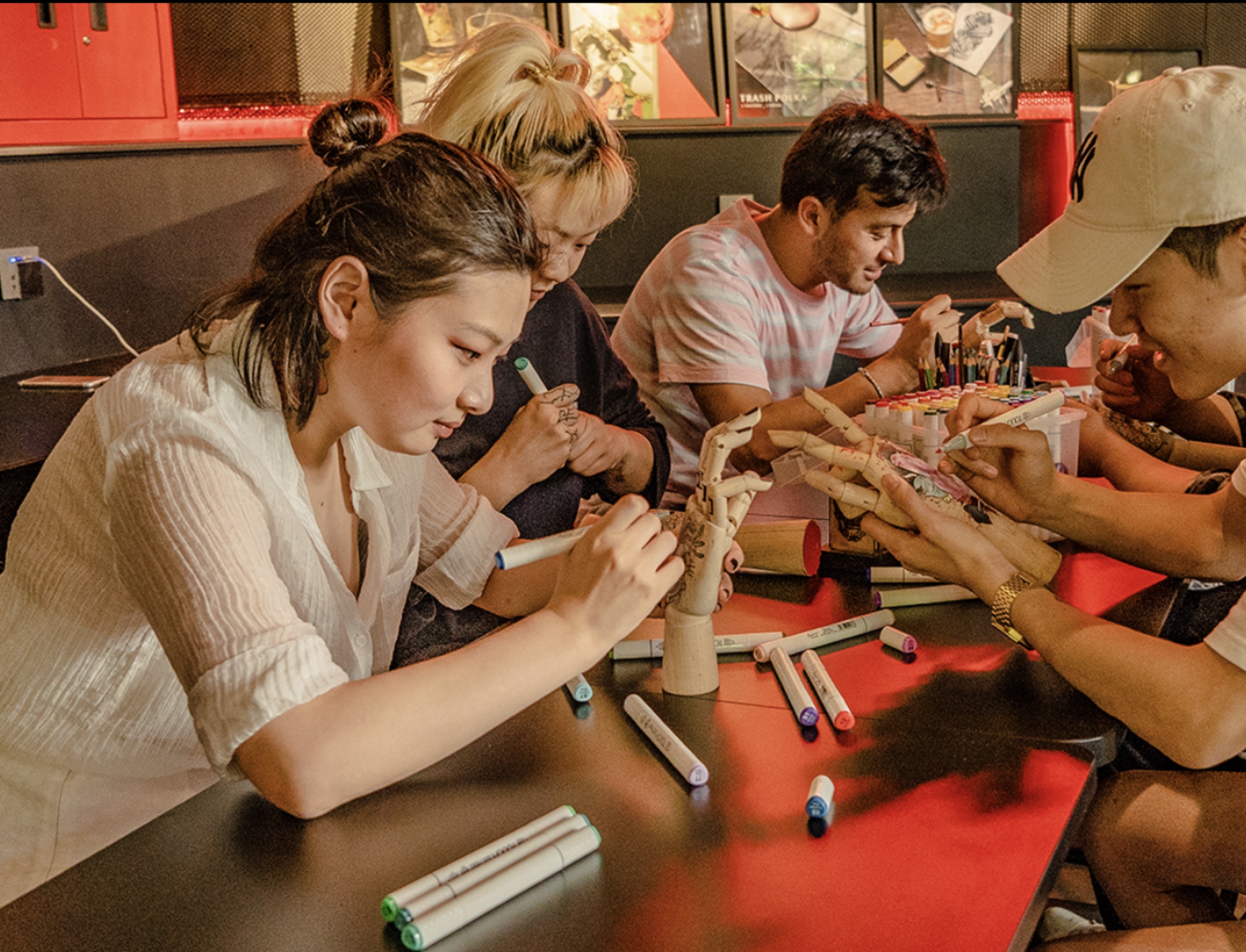
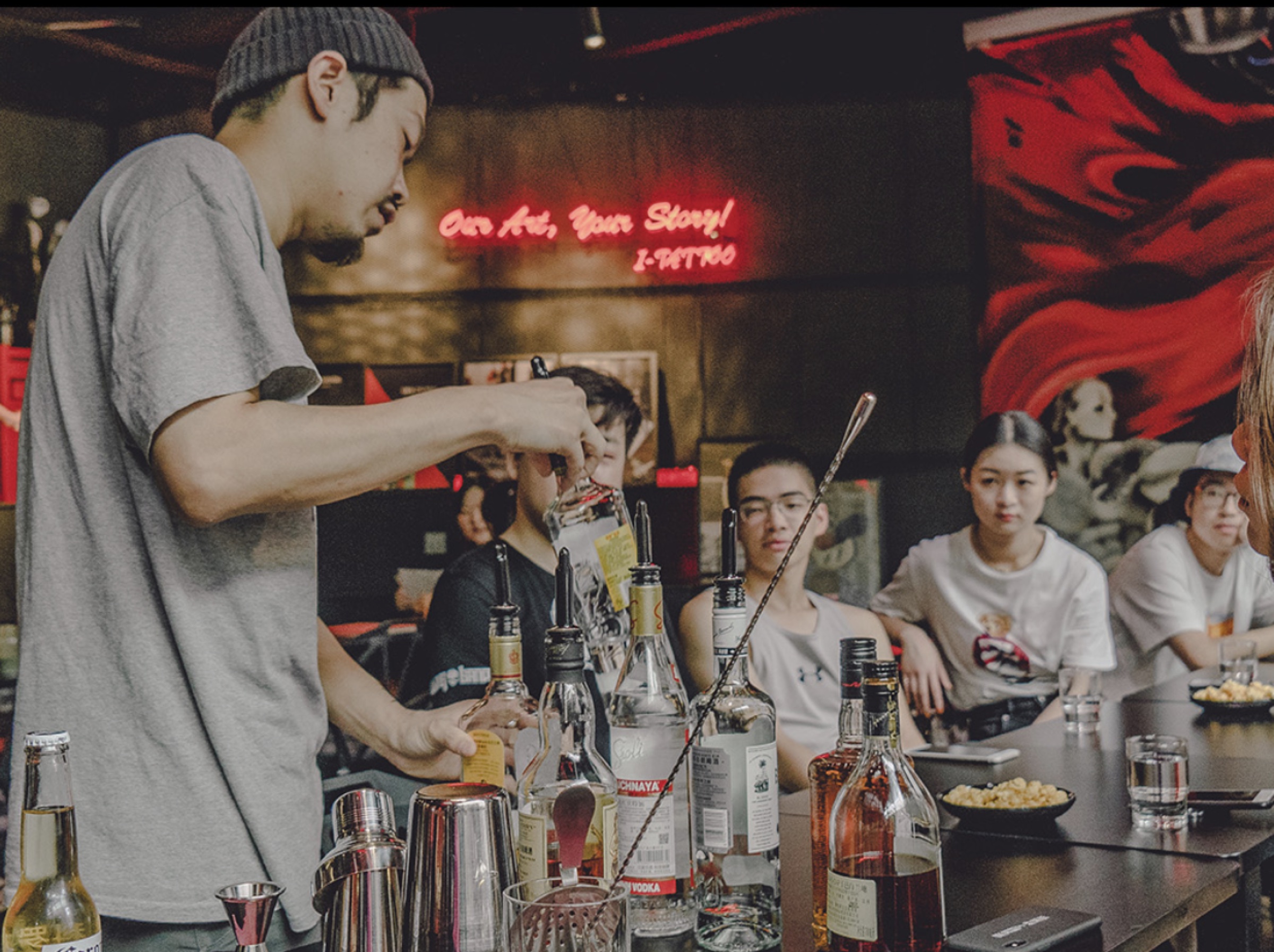
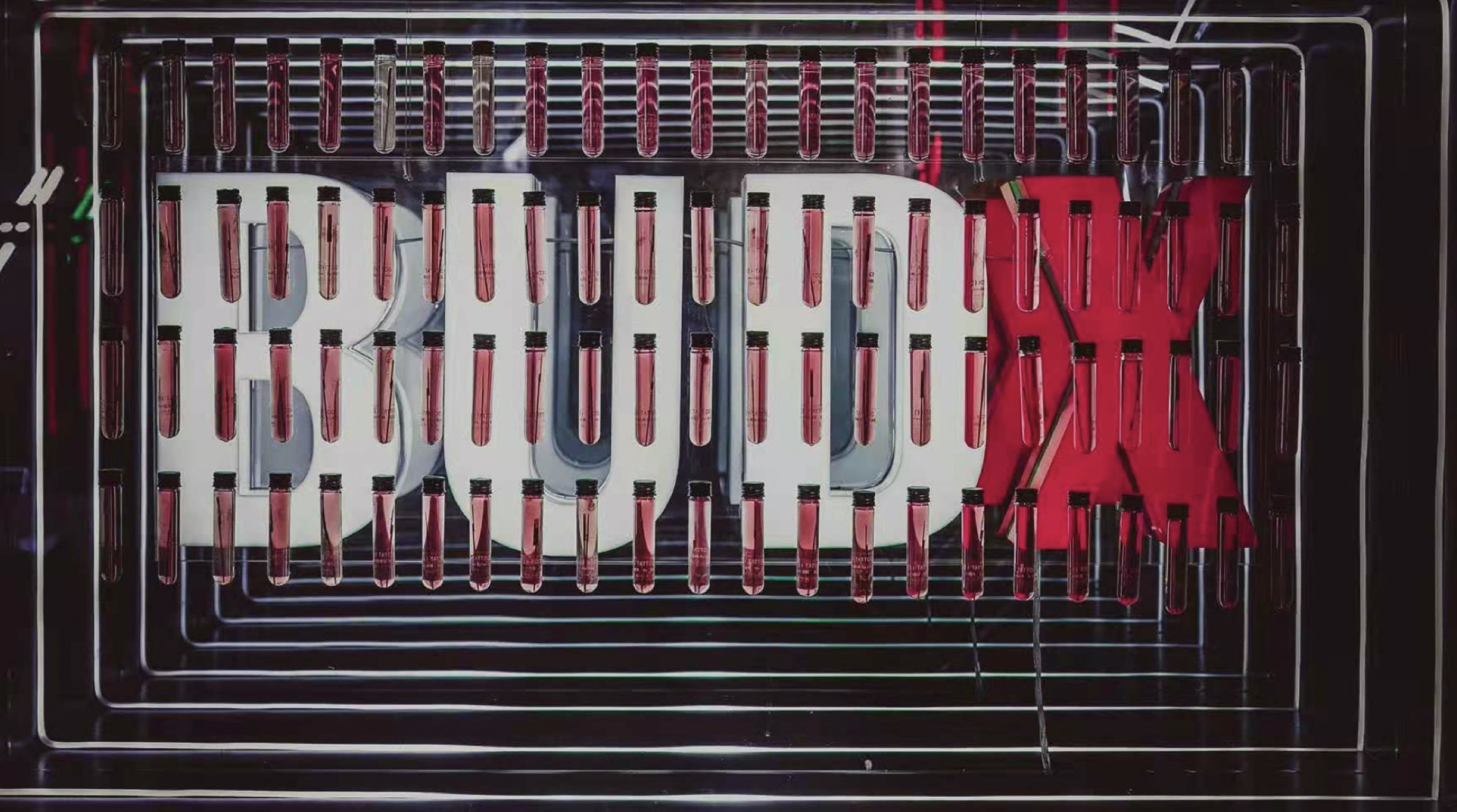
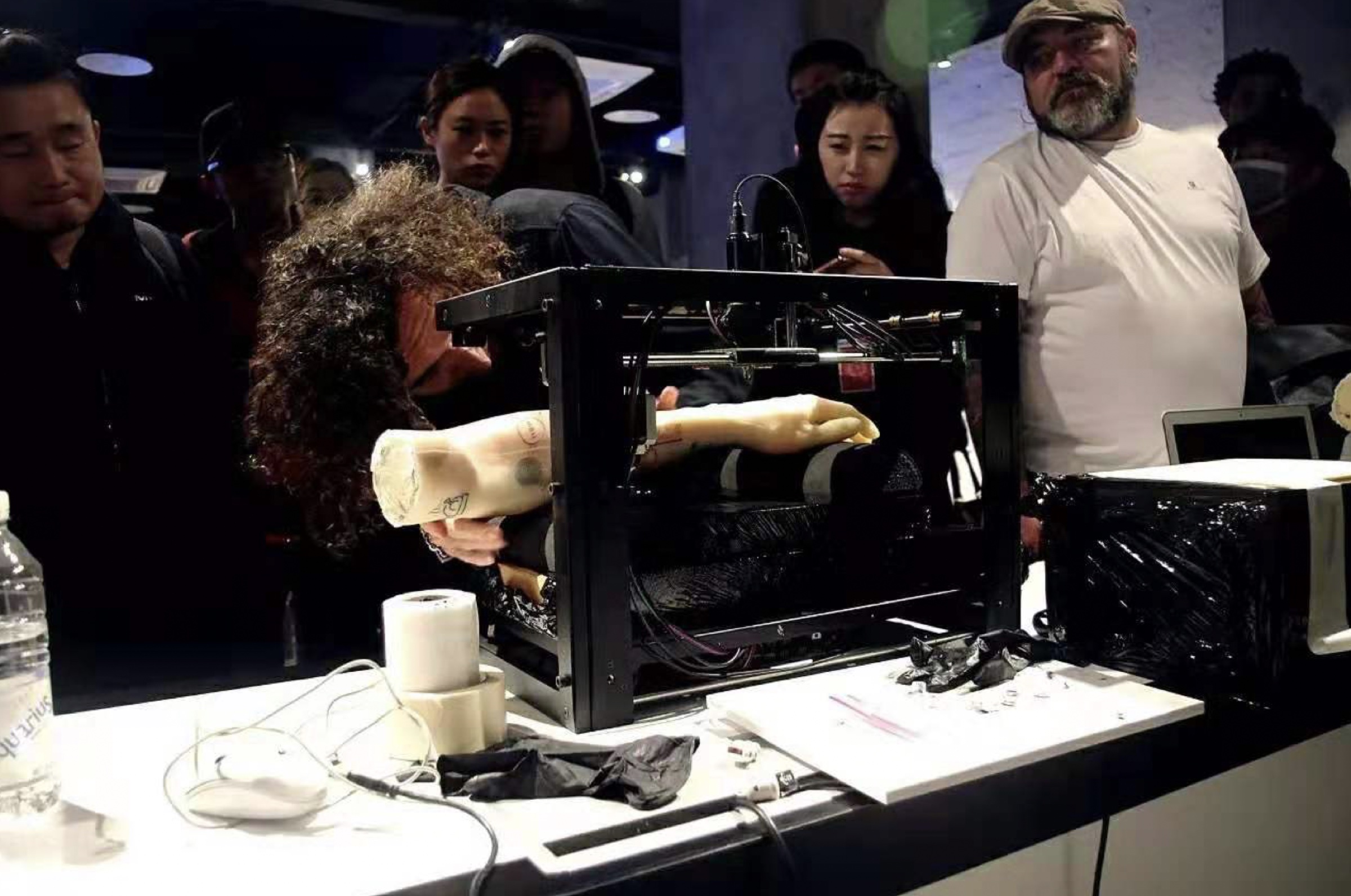
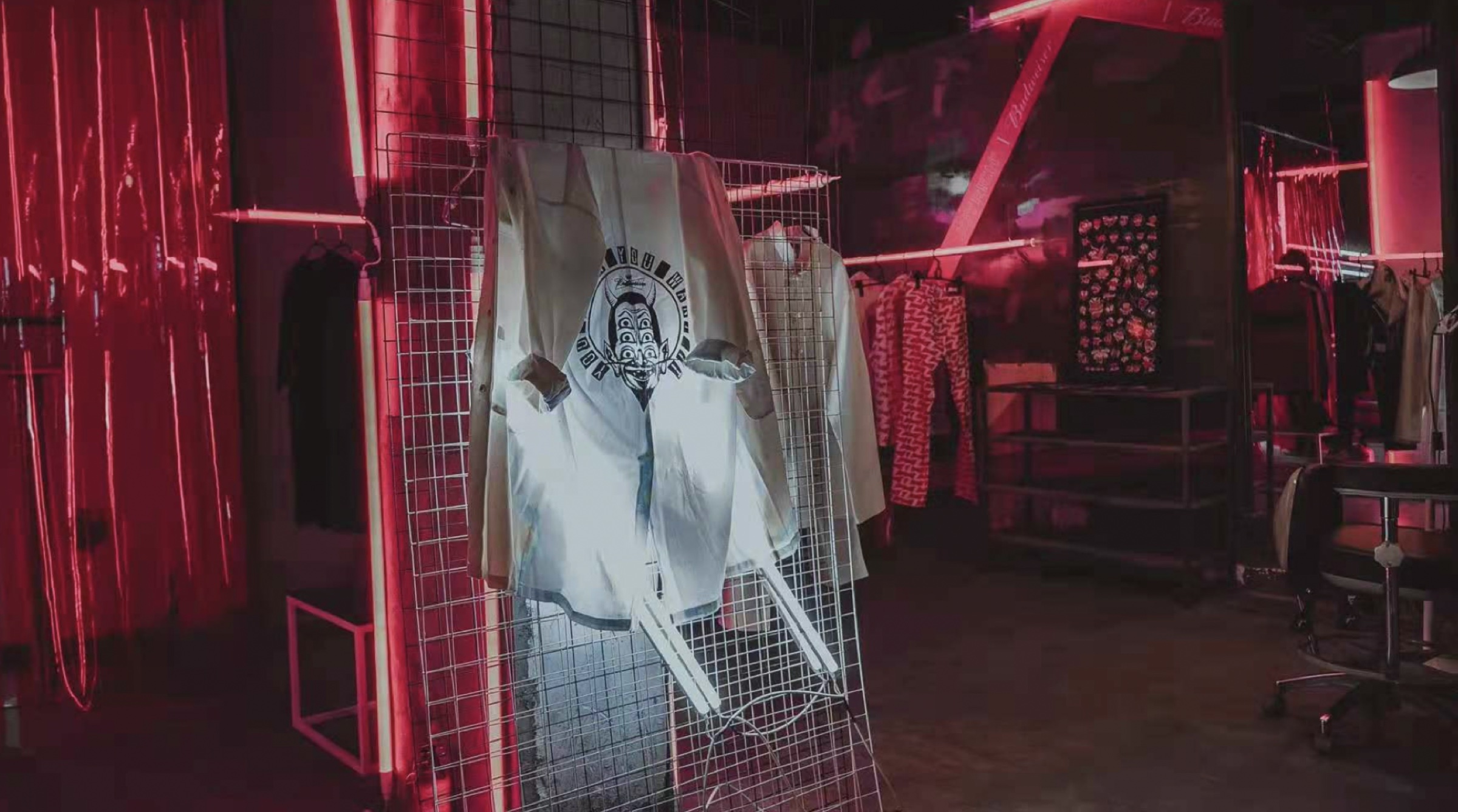
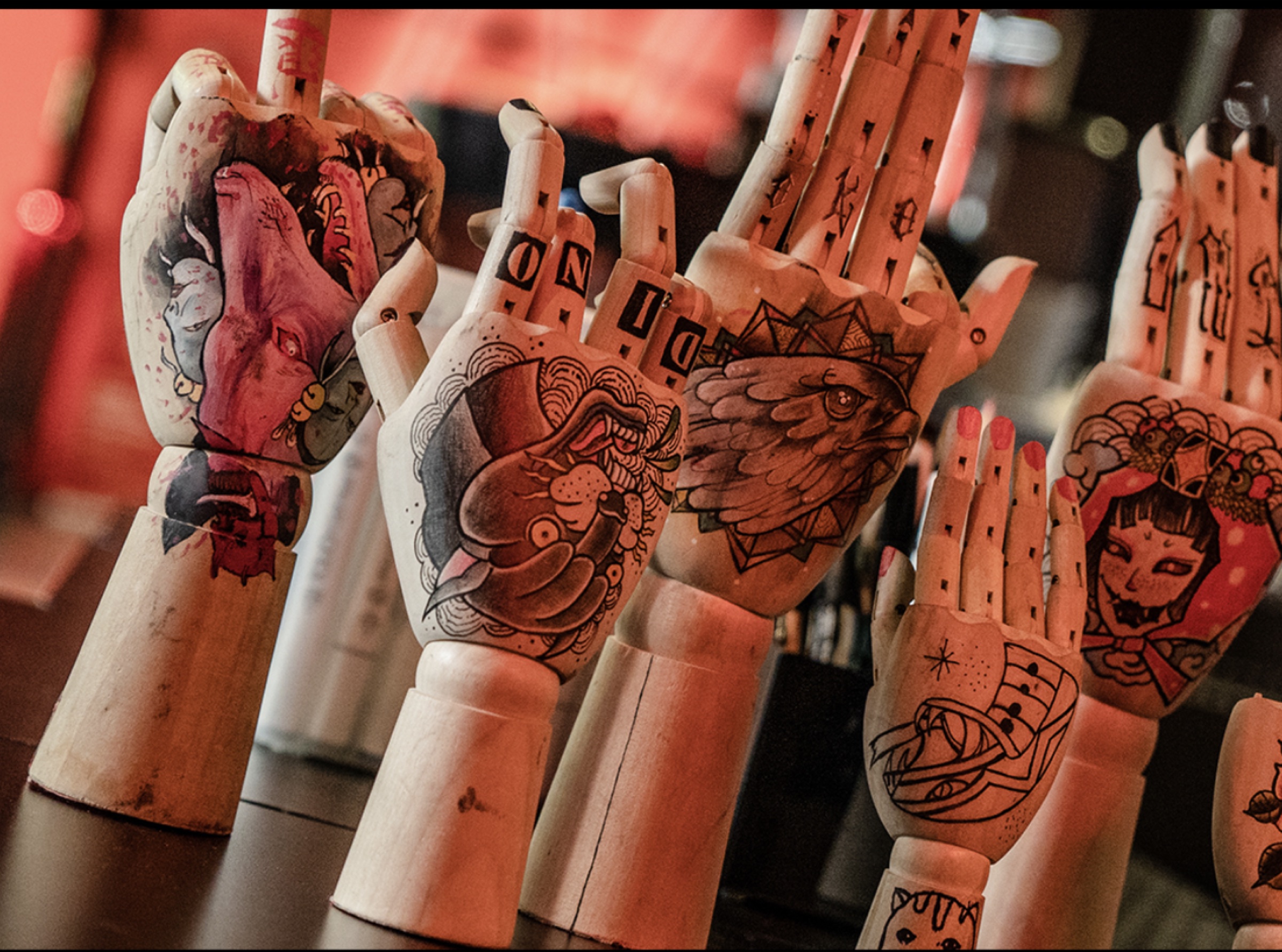
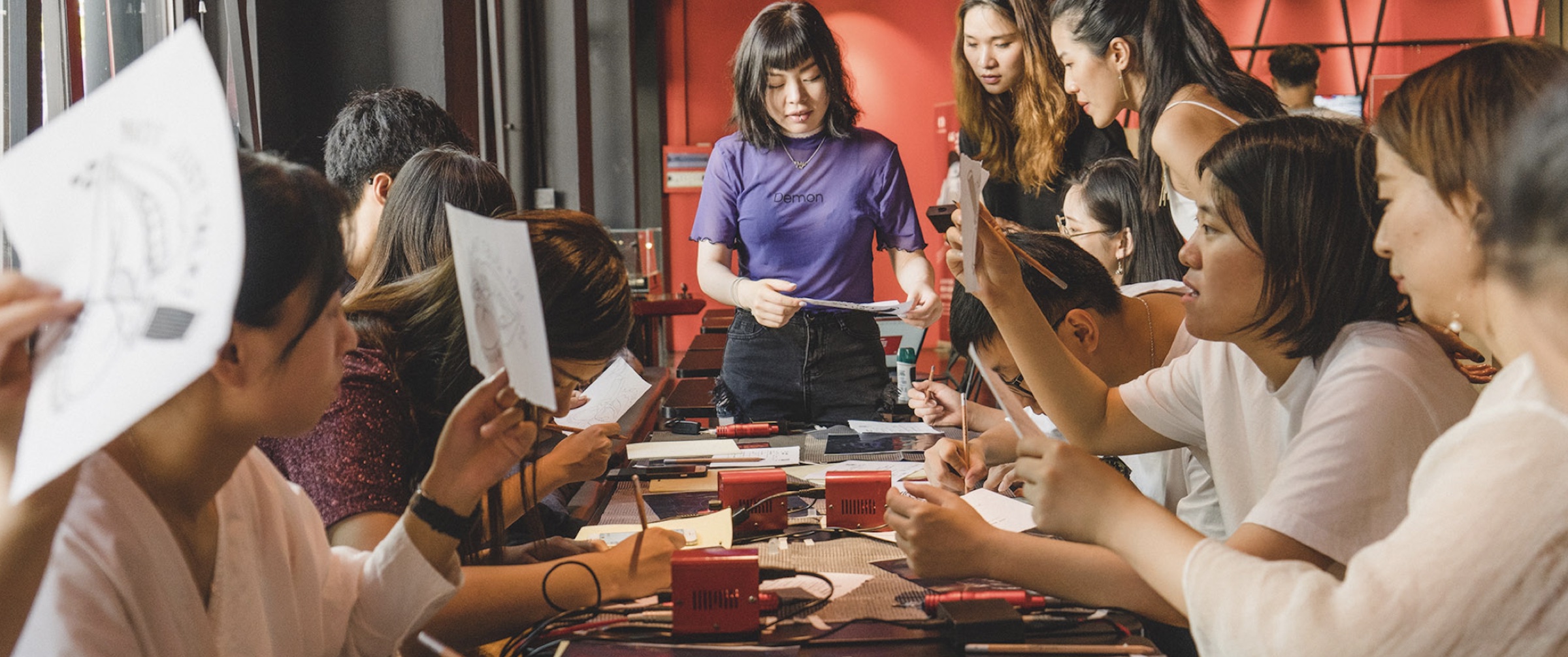
I-TATTOO is China's first full-spectrum tattoo company — bringing together studios, schools, bars, workshops, and art galleries under one brand. Invited by the founder from day one, I led the creation of the brand VI system and visual norms, and directed the holistic design of every offline experience space and online platform. From Shanghai to Chengdu, the brand grew into the most recognized tattoo enterprise in China — with flagship collaborations with VANS, Adidas, and ABInBev.
Reflection I-TATTOO pulled me out of the single-product mindset I'd built in tech. Suddenly I wasn't designing one interaction — I was designing a brand, a space, an app, and a culture at the same time. UX thinking scaled up: the principles didn't change, but the canvas did. Managing a team pushed that further — you stop thinking about decisions and start thinking about systems. The biggest lesson: in a startup, what decides survival isn't a design choice, it's a strategic one. The moment I started thinking like a business, the design team stopped being asked to execute — and started being asked what to build.
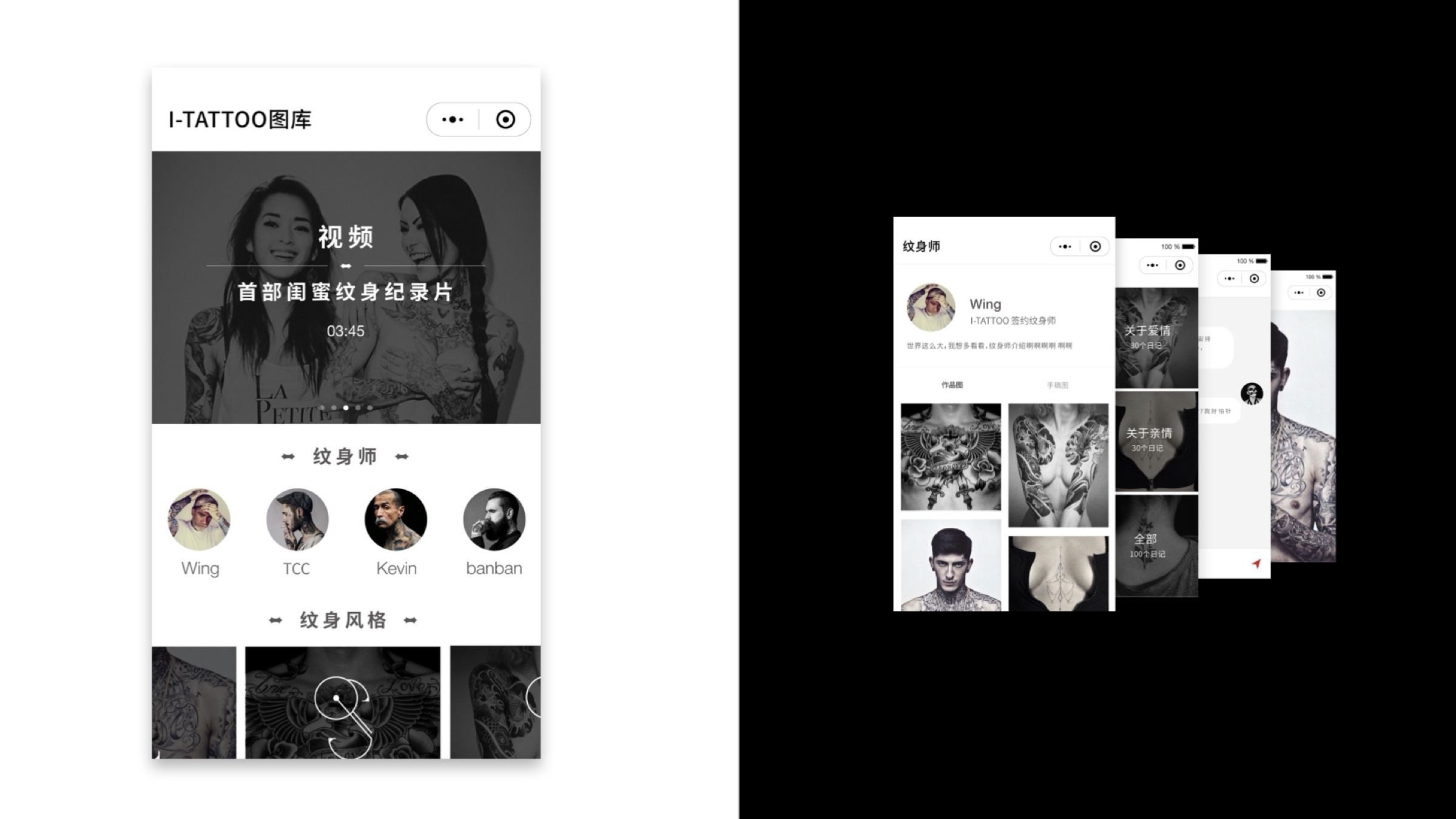
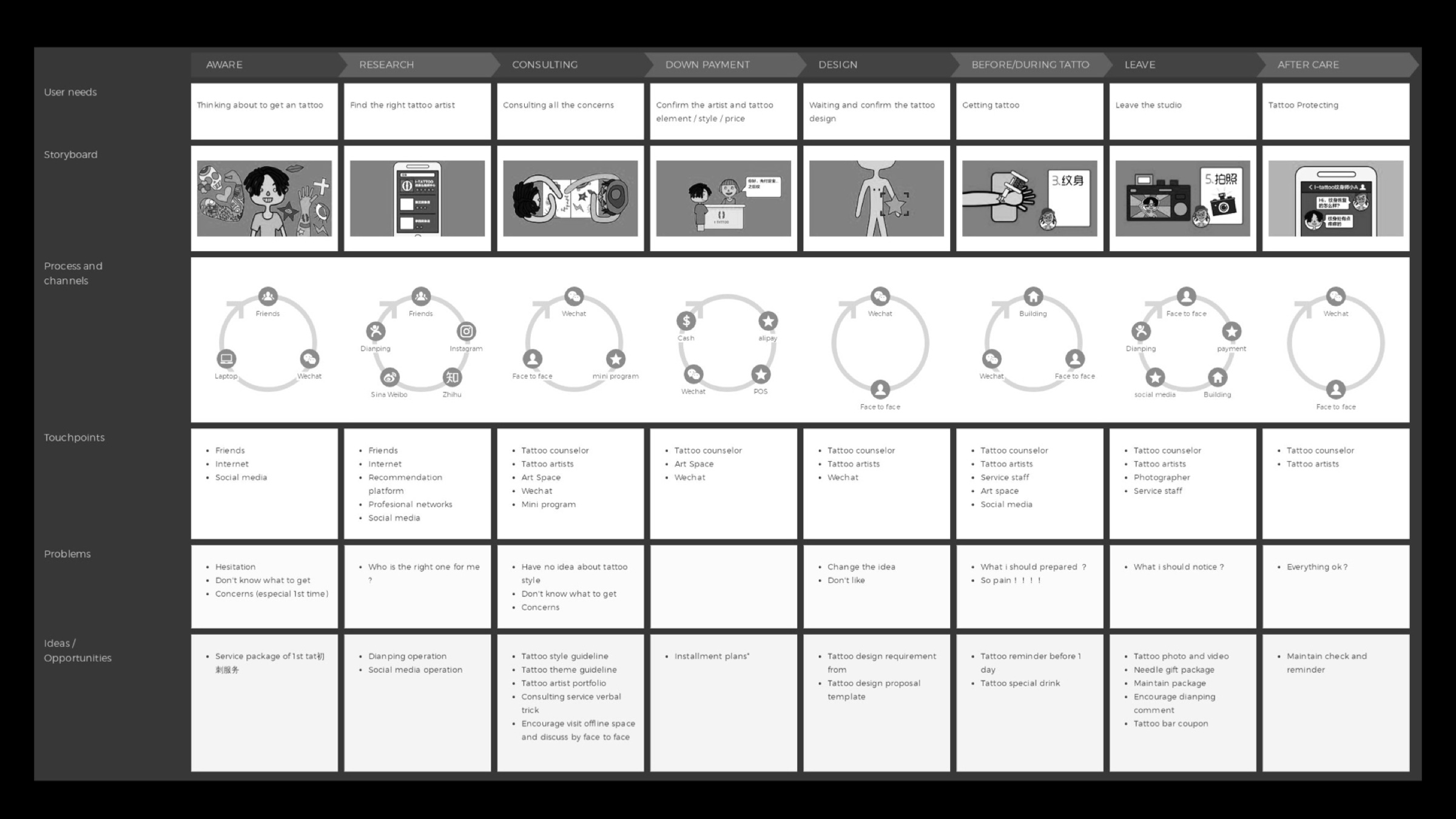
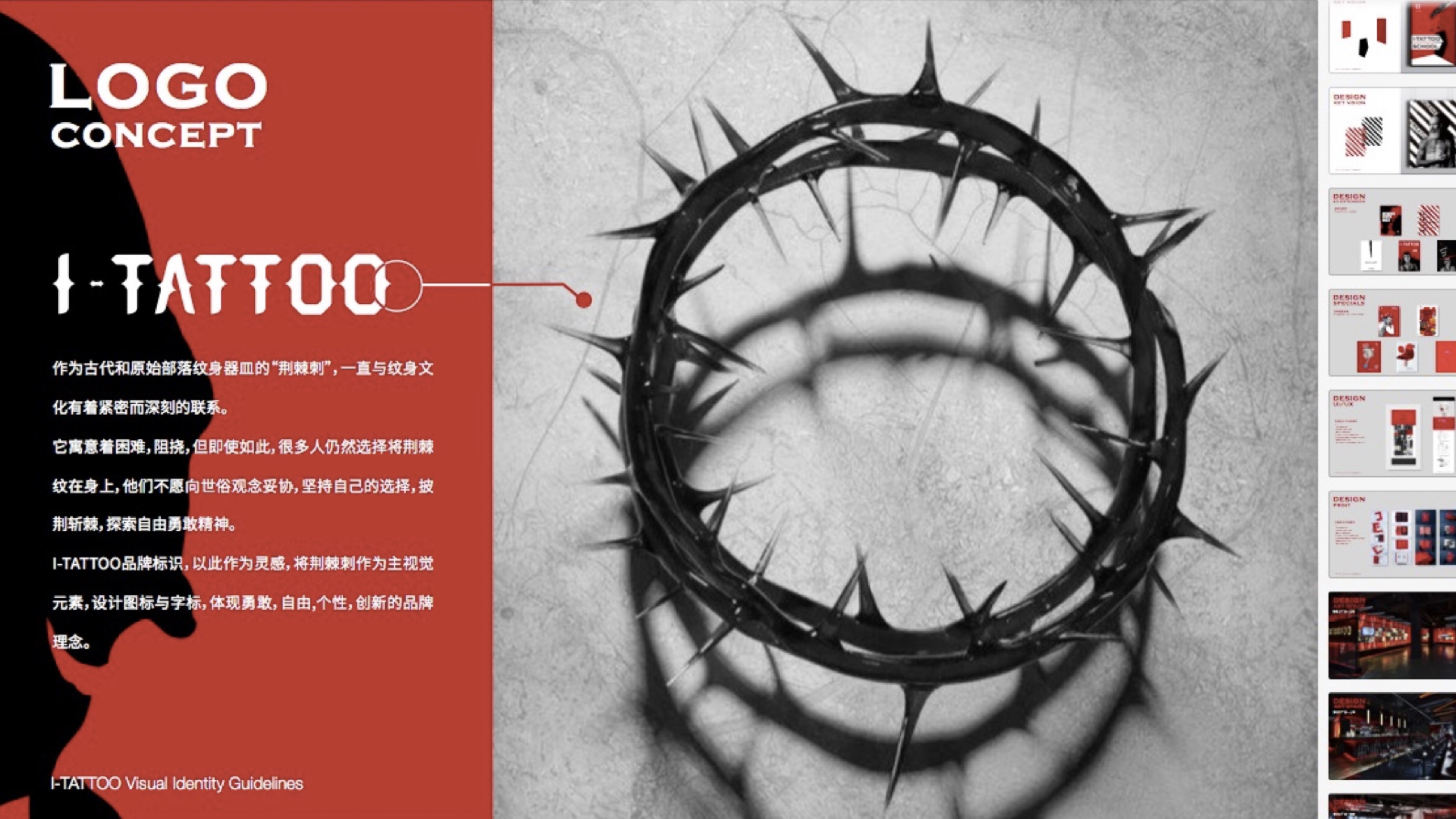
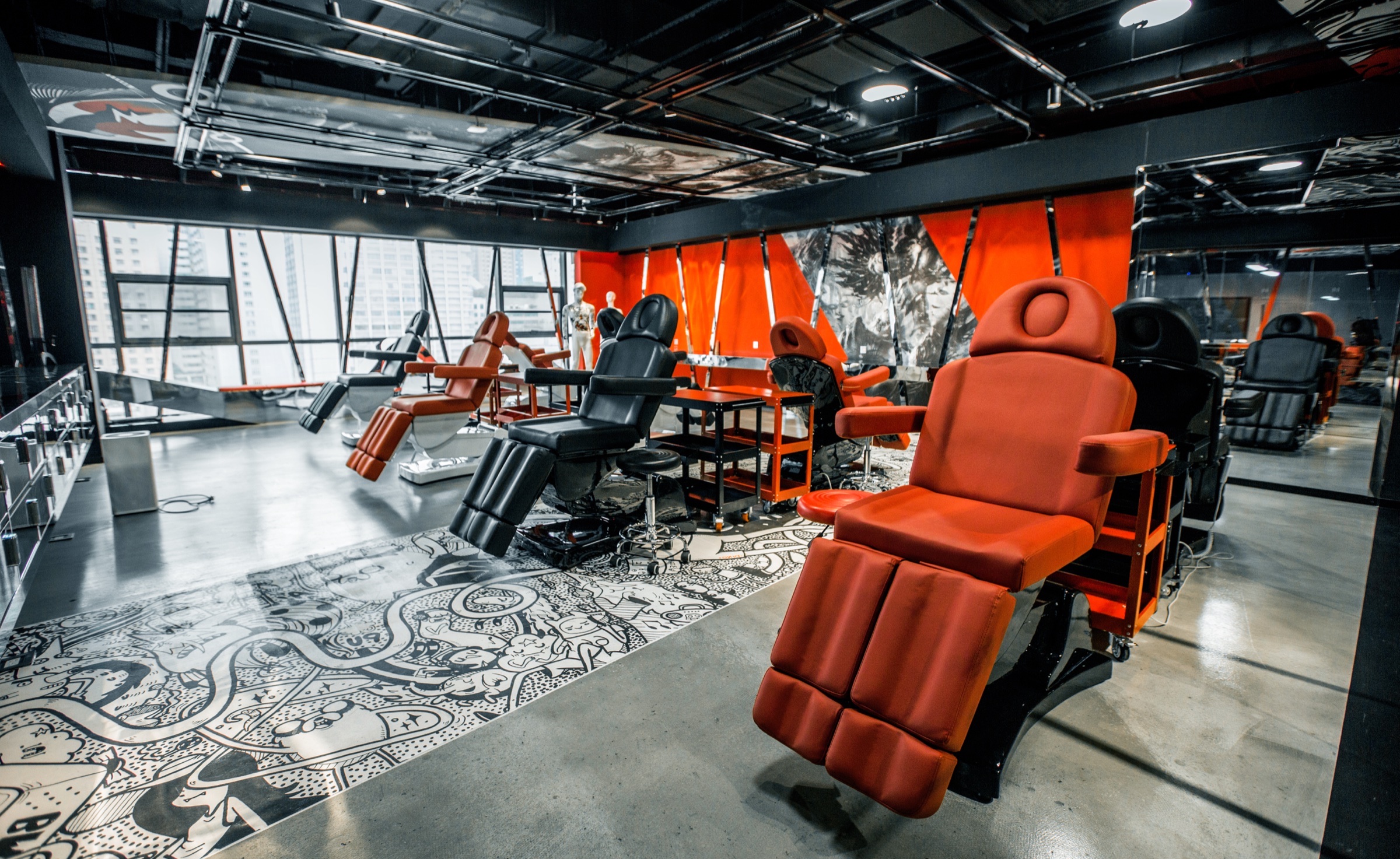
Led the team across brand identity, spatial experience, and digital platform — all running in parallel. I moved between design leader and project manager daily, translating briefs across architects, contractors, and developers. The sharpest decisions were in vendor selection and holding construction quality to spec.
As overall project lead, I coordinated across departments to bring each activation from concept to floor. For collaborations with VANS, Adidas, and ABInBev, I owned the client relationship end-to-end: pitching the concept, directing the design, and overseeing execution. A unified VI system kept the brand consistent as the company expanded from Shanghai to Chengdu.
Tea experience & service design
Nature steeped in modern life.
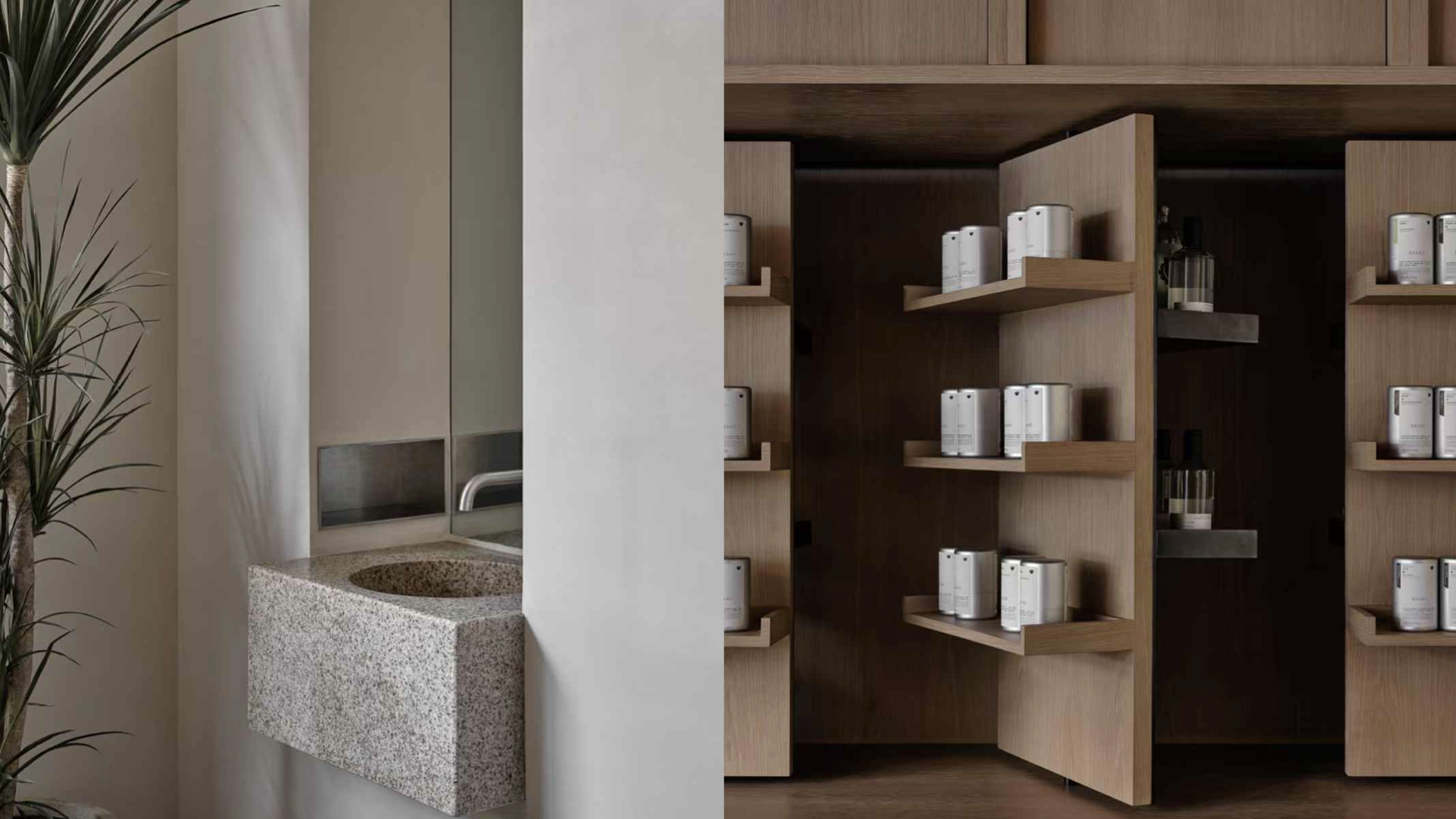
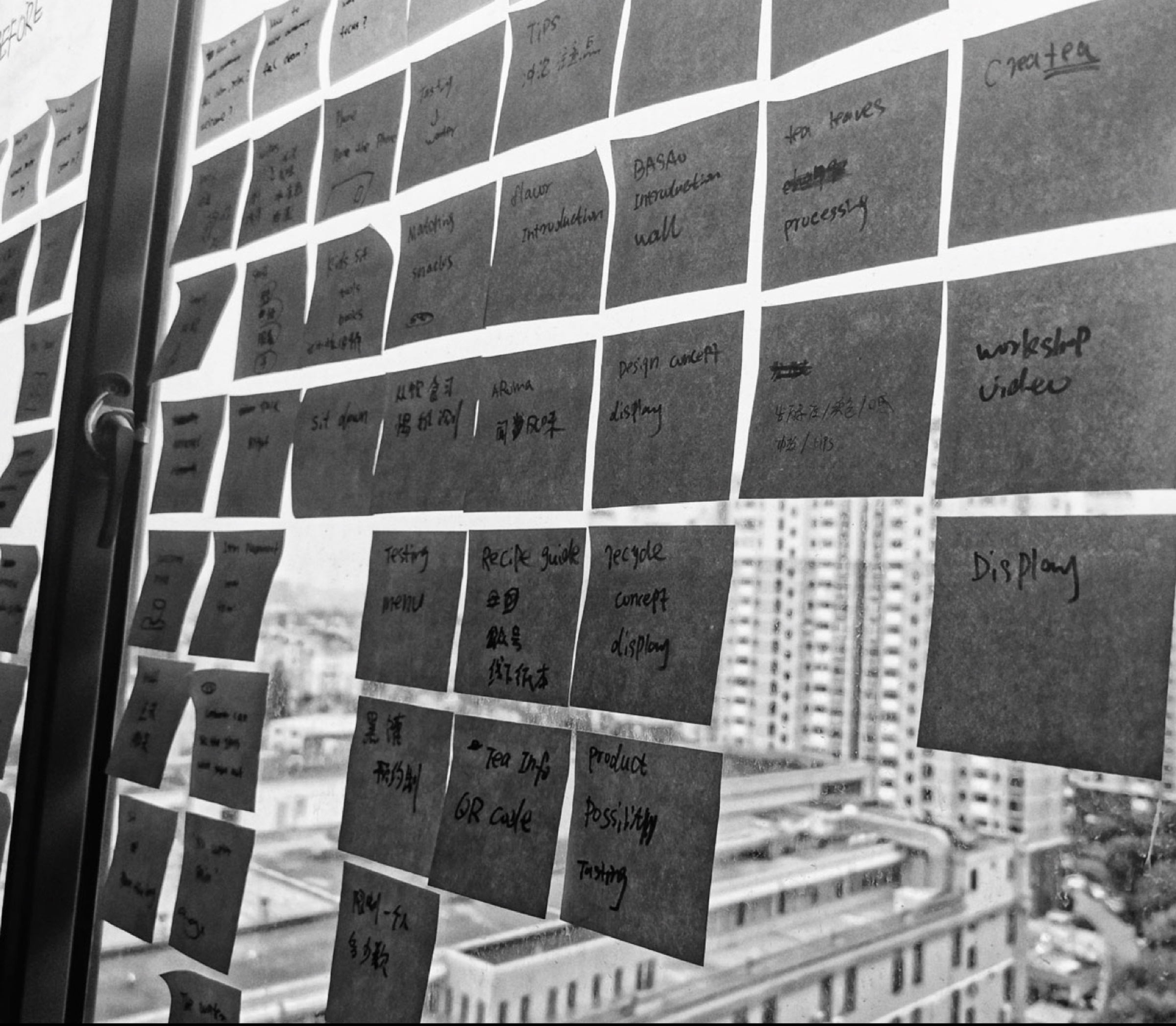
BASAO is a Hong Kong tea brand rooted in the beauty of nature — reinterpreting traditional tea culture for the way we live today. With two tea bars in Hong Kong and product lines spanning teabags, loose leaf, and utensils, the brand was ready to bring its philosophy to the mainland. I was invited to collaborate with renowned Danish design studio Norm-Archi to lead the experience planning and spatial design of BASAO's first tea and retail space in Xiamen — translating a quiet, nature-driven brand into a physical world.
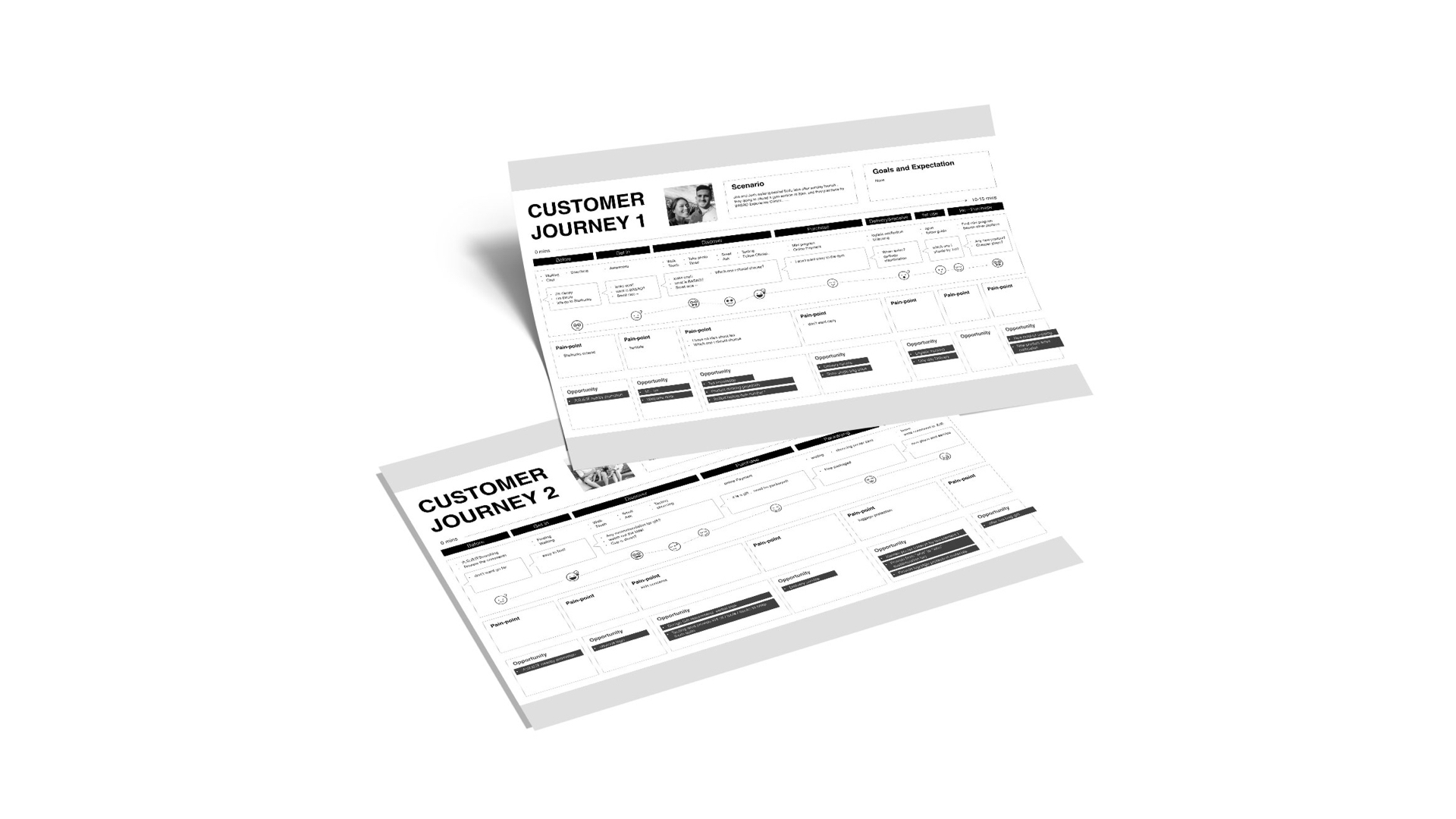
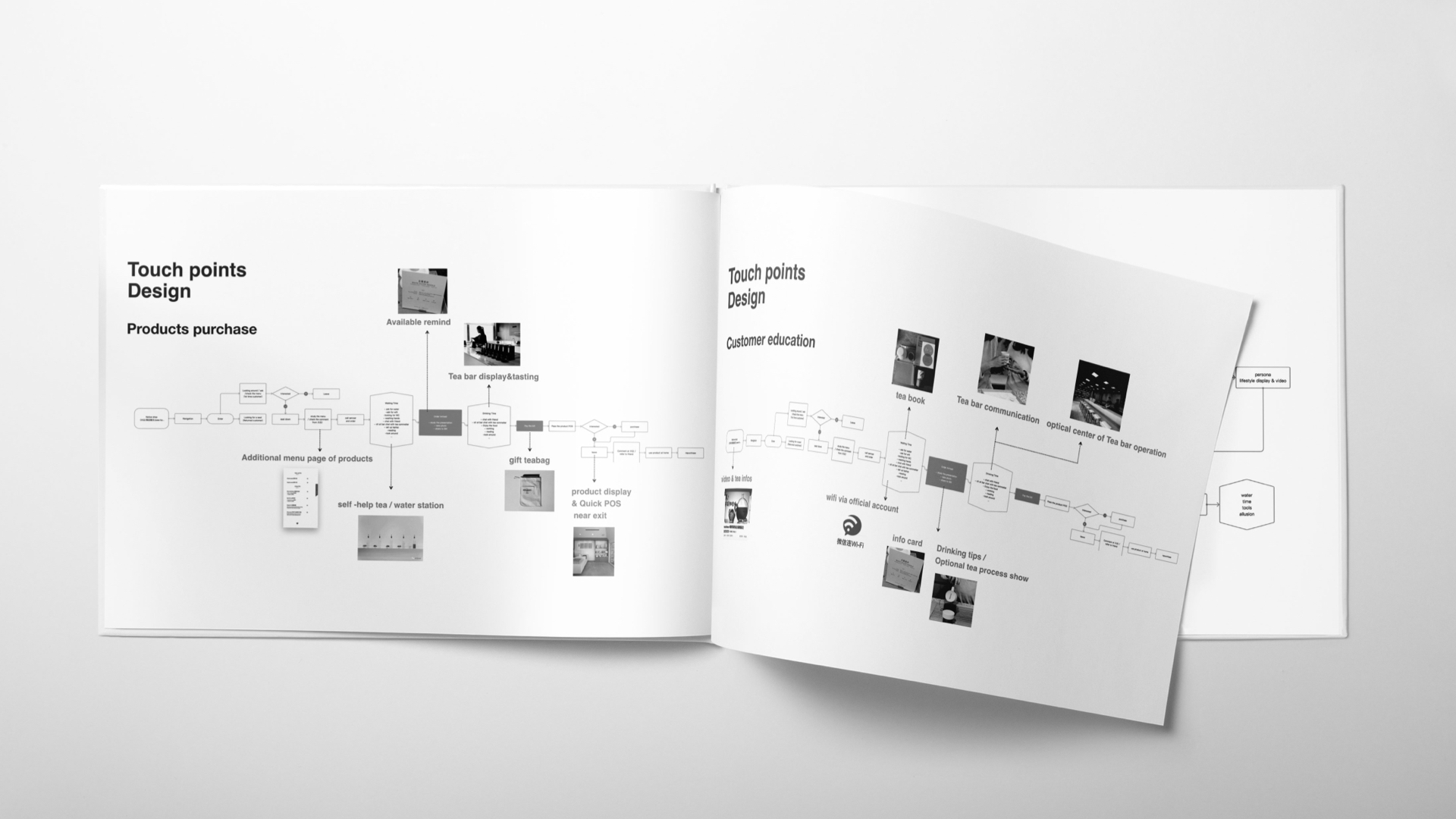
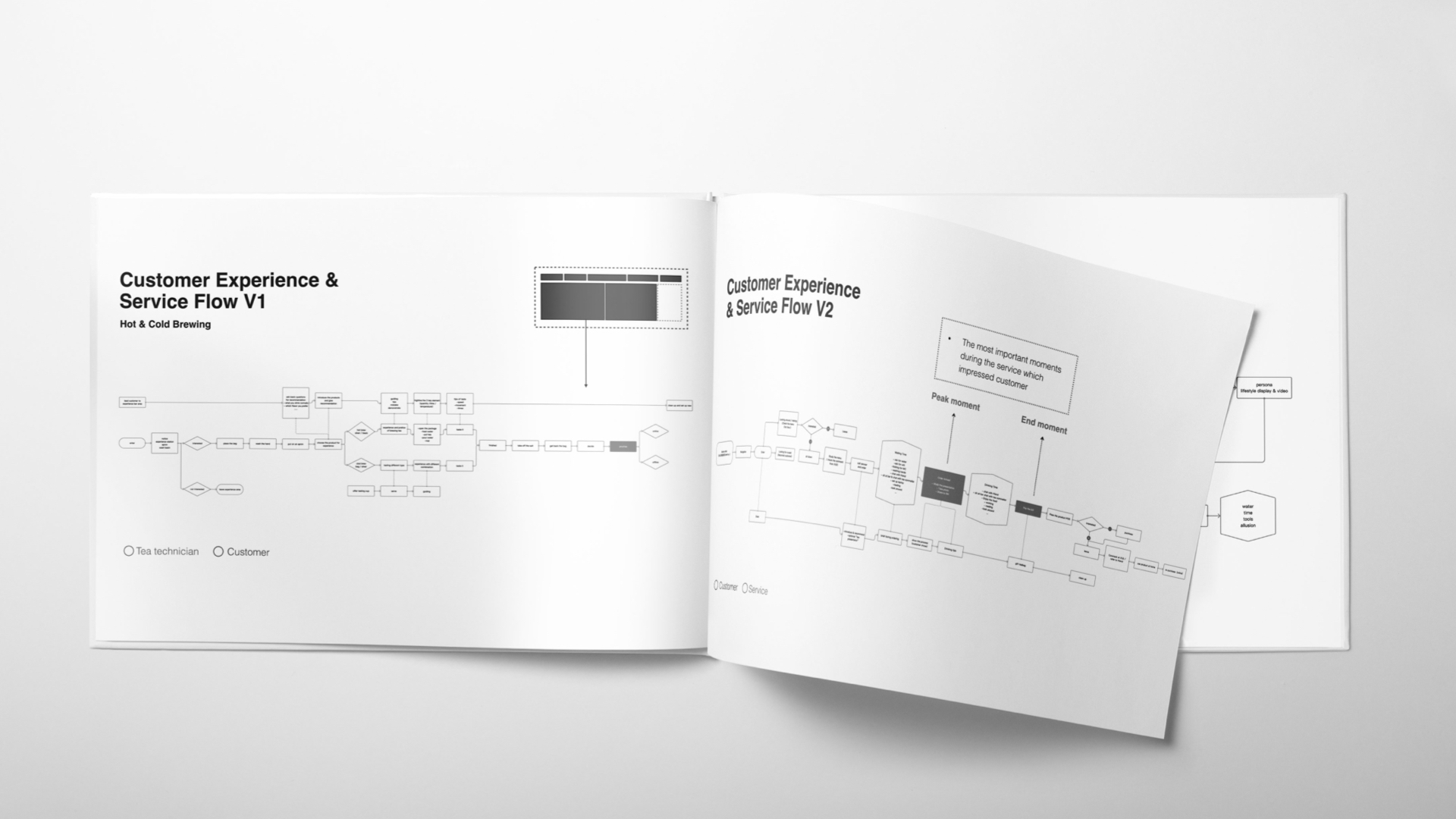
Reflection BASAO taught me that service design lives at the intersection of experience and economics. I mapped commercial touchpoints — conversion moments, upsell opportunities — directly into the customer journey and spatial flow. Good design isn't just about making users feel something. It has to make the business viable. When both are true at the same time, that's when design earns its seat.
Building Strong Peak Moment & End Moment
Embodied computing & experiment
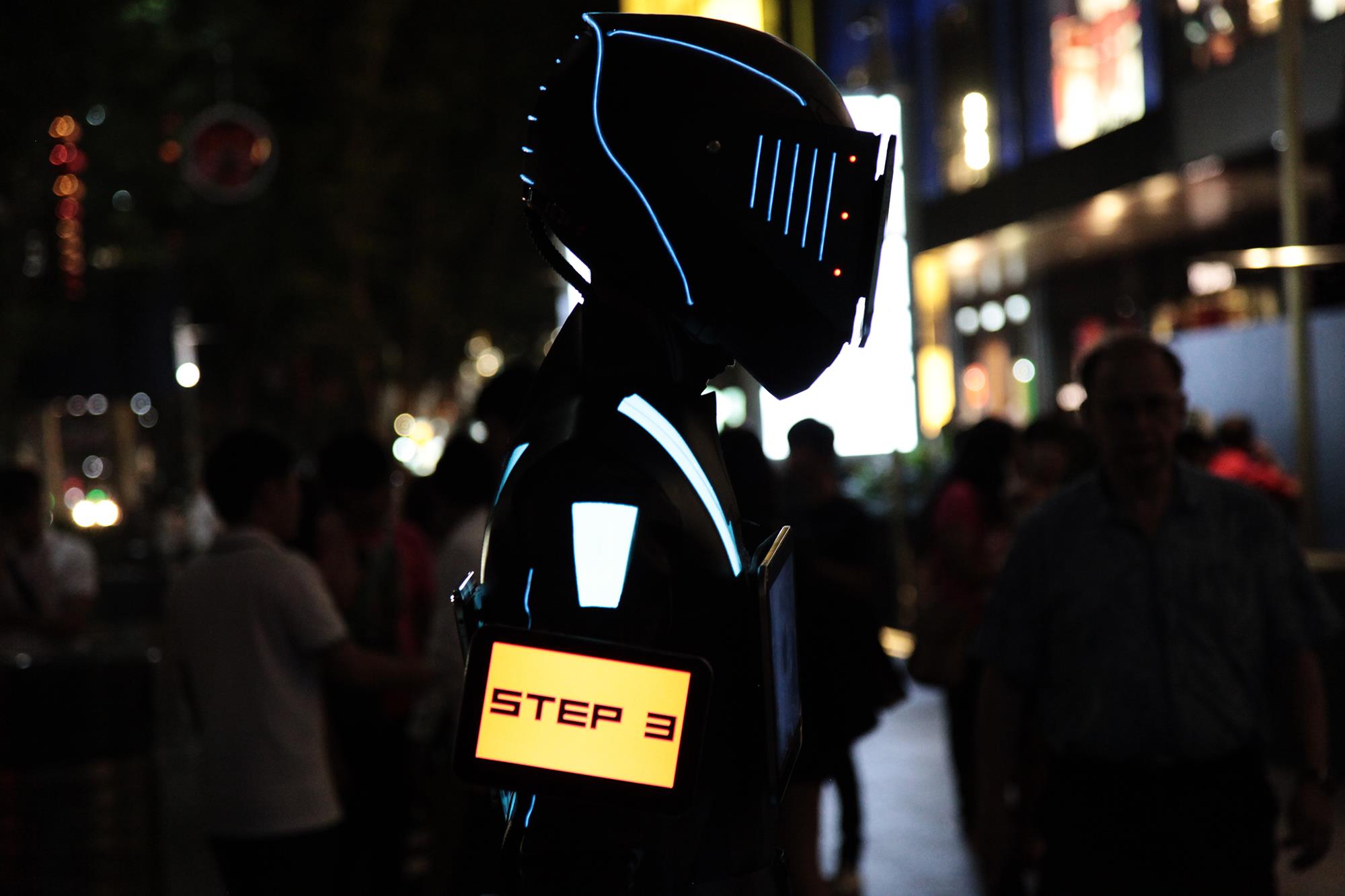
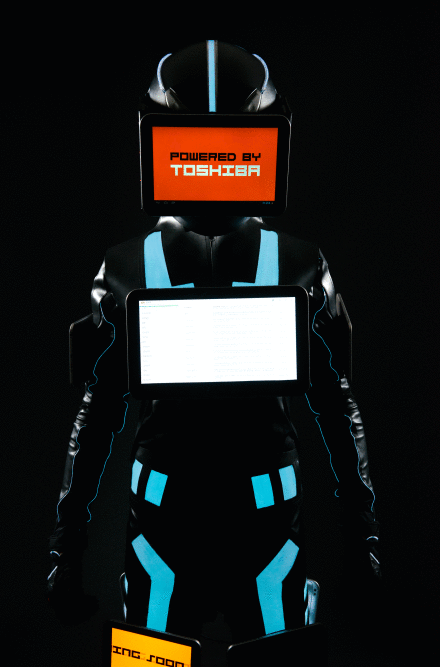
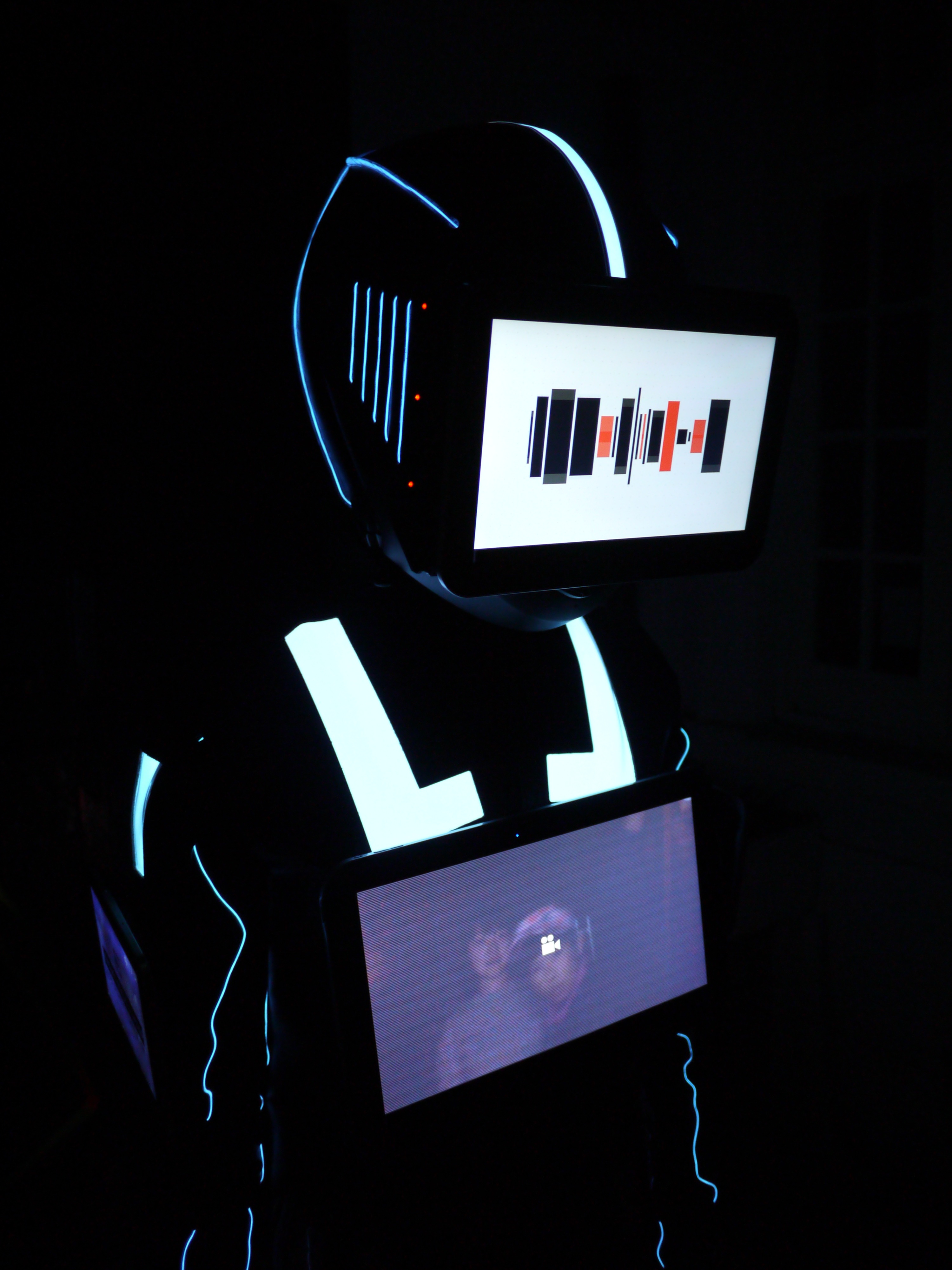
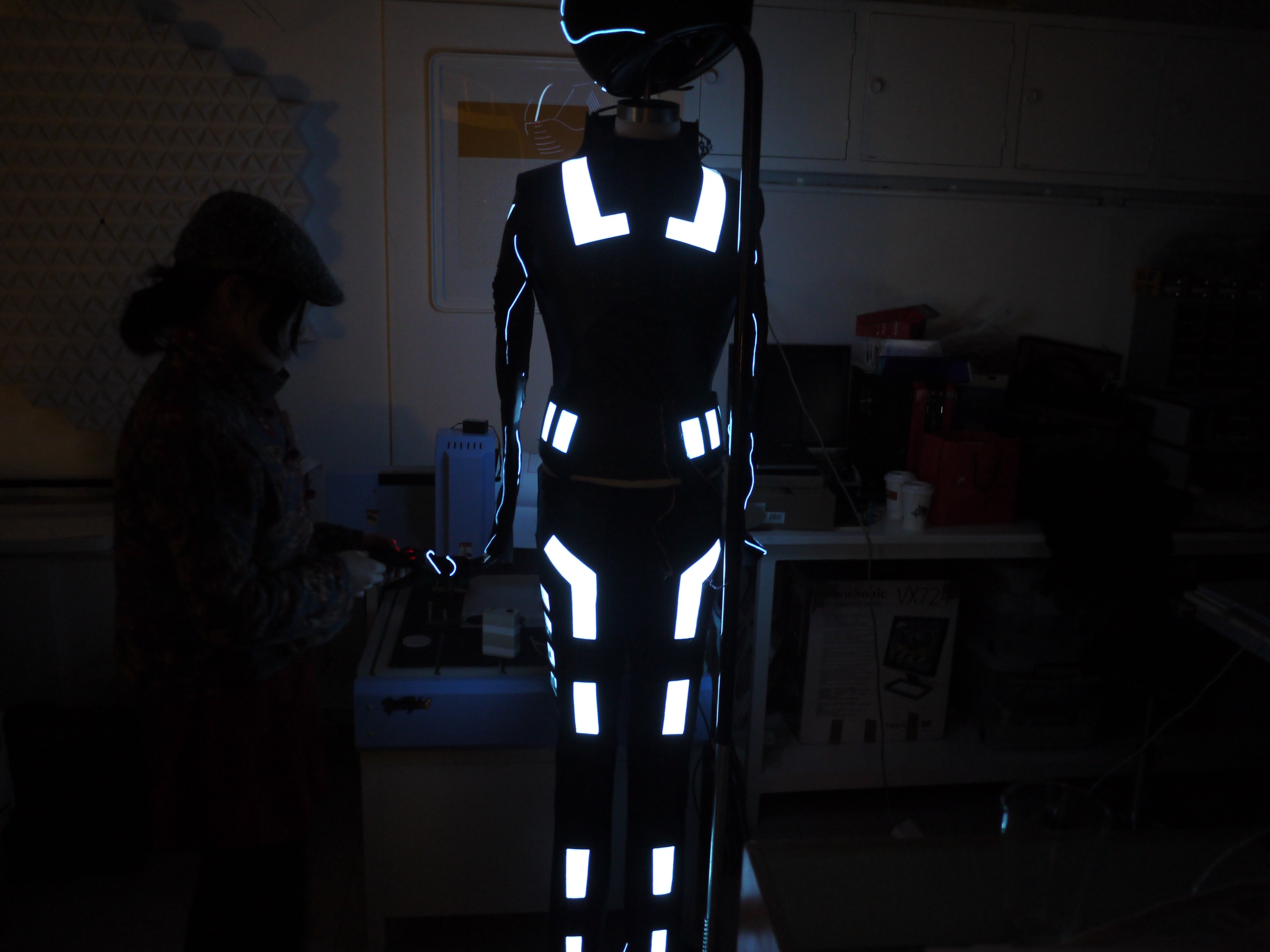
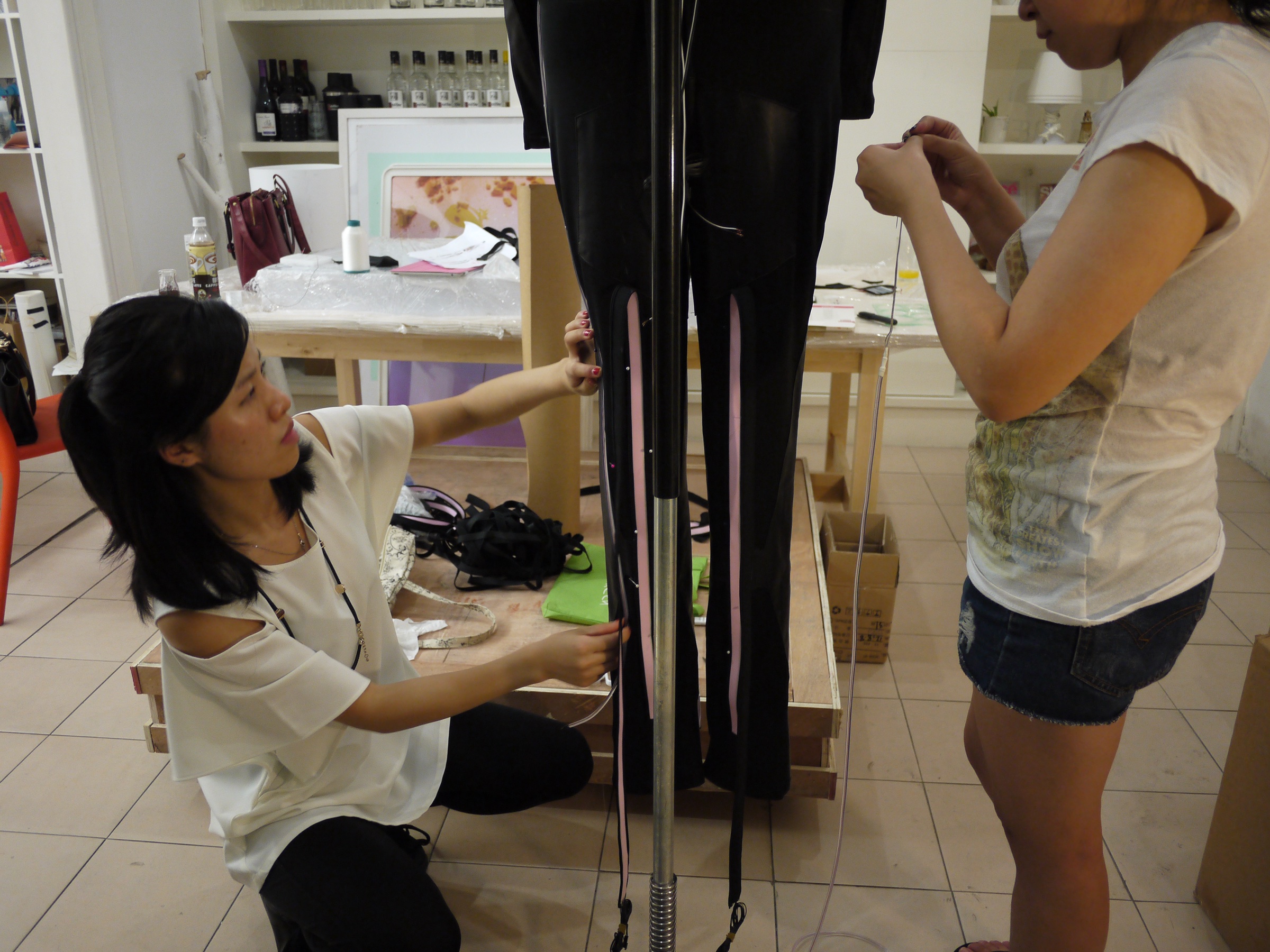
A wearable installation for Toshiba, 2013.
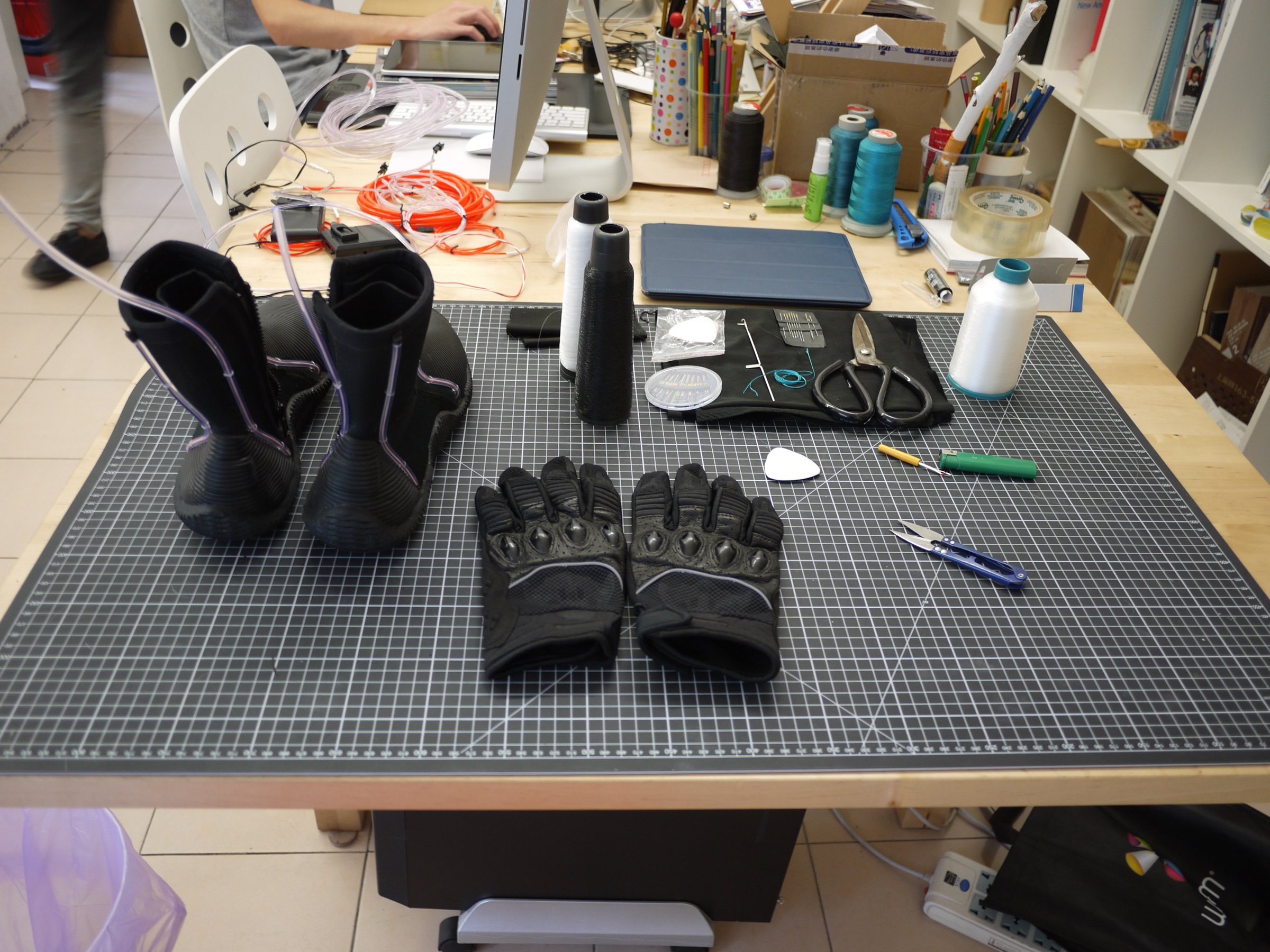
A collaboration with installation studio Super Nature and a costume designer for Toshiba's tablet launch in Shanghai. The brief was to bring a tablet into the street; we built a body to carry it. My role was prototyping the wearable garment itself — working out how to route circuits through soft fabric, following the body's structure and movement, while keeping everything stable under real performance conditions.
Looking back An early experiment in computing that lives on the body — a question I'm still asking, now with AI. In 2013, the challenge was physical: how do you make technology wearable without breaking the body's natural movement? In 2026, the challenge is relational: how do you make AI feel like it belongs, without overriding what makes us human.
"Wing has a sharp eye and she doesn't settle. Working on CAF together, she pushed the interaction thinking further than the brief asked for."
"Her ability to bridge hardware and software thinking is exceptional. A true design technologist."
"Wing understood what we were trying to build before we could explain it clearly. The Xiamen space came out exactly as we hoped."
"Working with Wing felt effortless — she turns ambiguity into clarity and makes the complex feel simple."
"Wing designs with all the senses. Her workshop at Tencent opened up something in my team we didn't see coming — new directions, new energy, a creative sensation."
"Wing gives everything to work she believes in. She moves from idea to execution fast, drawing on a rare cross-cultural depth. She doesn't just raise the bar. She moves it somewhere new."
Open to roles in Europe ·
Available July 2026
(Authorized to work in Spain / EU —
no sponsorship required)